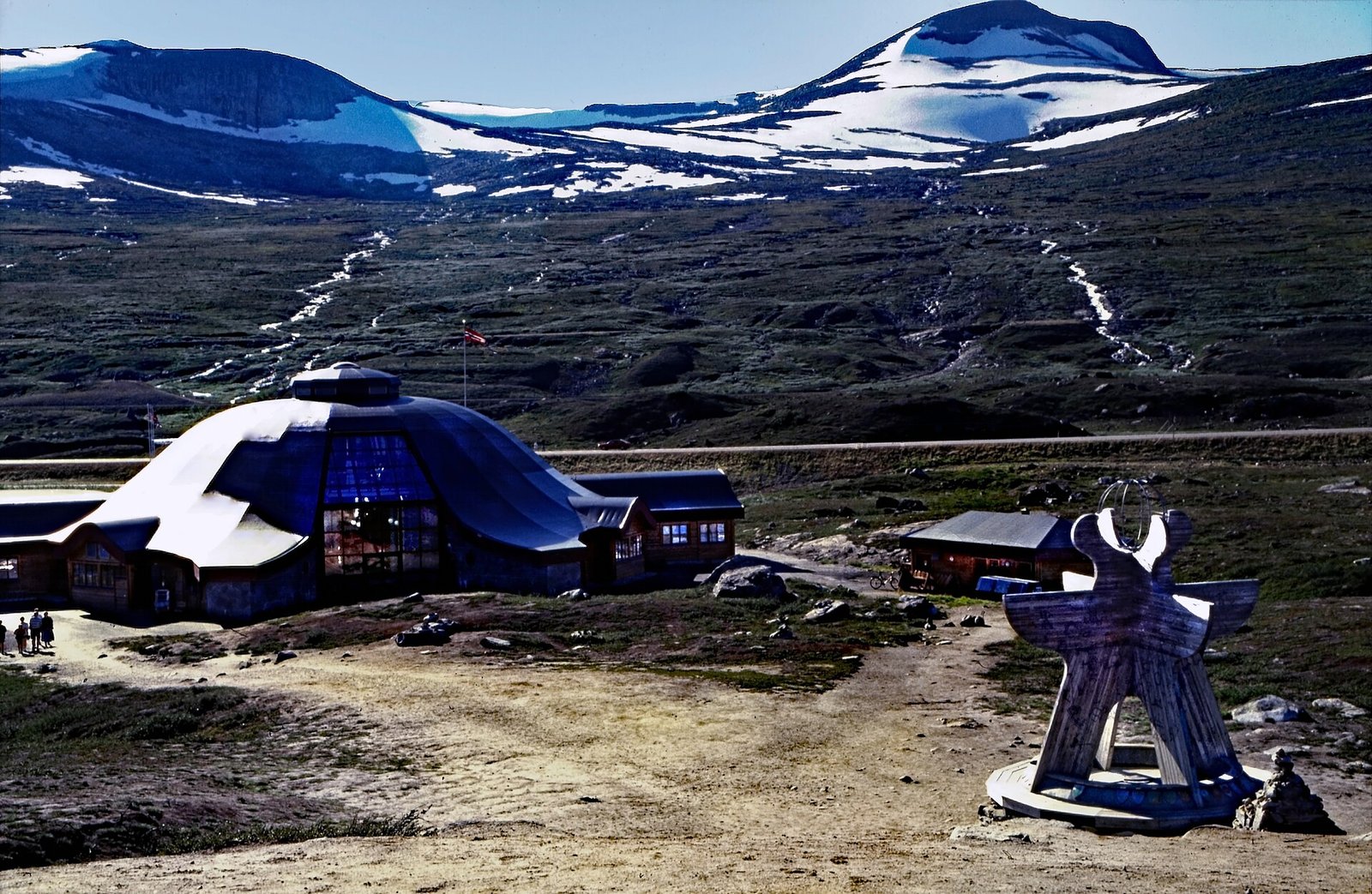
The Arctic Circle at latitude 66°33'N is the geographic threshold that defines everything specific about northern Norway — polar night, midnight sun, and the prime northern lights belt. Cross it northbound and the rules change. Exactly what changes, and when, is what this guide explains.
What Actually Happens at the Arctic Circle
The Arctic Circle marks the southernmost latitude where the sun stays below the horizon on the winter solstice (polar night) and above the horizon on the summer solstice (midnight sun). On December 21, standing exactly at 66.5°N, the sun just barely skims the horizon without rising. One degree north, it stays below. One degree south, it rises briefly.
In practice, the phenomena are gradual rather than instant. The closer you get to the pole, the longer the polar night and midnight sun periods last. In Tromsø (69.6°N), polar night lasts from late November to mid-January. At the actual Arctic Circle, it's just a single day — December 21. Similarly, midnight sun in Tromsø runs from May to July, while at the Arctic Circle itself you get only brief twilight at midnight rather than true 24-hour daylight.
This is why the Arctic Circle itself is more symbolic than practical for aurora hunting or midnight sun tourism. Most travellers aiming for those phenomena should plan further north — at Tromsø, Alta, or Kirkenes — where the effects are pronounced and sustained.
The Arctic Circle Centre at Polarsirkelen
The most visited crossing point is the Arctic Circle Centre (Polarsirkelsenteret) on the E6 highway in Saltfjellet national park, approximately 80 km north of Mo i Rana and 260 km south of Bodø. There's a visitor centre with café and small museum, a marked monument, and the obligatory certificate of crossing (free, issued at the visitor centre).
The centre is open year-round, though winter hours (November–March) are typically 9:00–16:00. Summer hours extend to 18:00 or later. Entry is free. The café serves basic food and coffee at standard Norwegian prices (coffee 40–50 NOK, sandwich 80–120 NOK). Allow 30–45 minutes for a visit if you want to walk the short monument trail and take photos.
It's on the main E6 route north and makes a natural stop on any road trip toward Tromsø or the Lofoten islands. Facilities include toilets, a gift shop, and ample parking. In winter, the E6 is kept open but snow and ice are normal; check weather and road conditions before driving.
Northern Lights and the Arctic Circle
The northern lights oval runs through the Arctic, broadly between 65° and 72°N. This means aurora viewing is excellent anywhere above the Arctic Circle in Norway — and actually at its most reliable in the 68°–71°N band where Tromsø, Alta, and Finnmark sit. Being at the Arctic Circle itself (66.5°N) is at the southern edge of the aurora oval, giving you aurora sightings but not as frequently or as dramatically overhead.
For the best northern lights, aim for 69°N+. The Arctic Circle crossing is a milestone, not the destination. If you want a genuine aurora hunt with high success rates, base yourself in Tromsø (260 km north of the circle) where clear-sky aurora frequency peaks at around 1 in 3 nights during the season, versus closer to 1 in 4 at the Arctic Circle itself.
Cities and Destinations Just Above the Arctic Circle
The following towns and cities all sit above 66.5°N and offer proper accommodation, dining, and organised tours:
| Destination | Latitude | Distance from Arctic Circle | Main draw |
|---|---|---|---|
| Tromsø | 69.6°N | 350 km north | Northern lights hub, city amenities, winter activities |
| Bodø | 67.3°N | 180 km north | Gateway to Lofoten, coastal scenery |
| Kirkenes | 69.7°N | 370 km east | Russian border, ice hotel, extreme Arctic |
| Alta | 69.9°N | 360 km north | Northern lights capital, inland plateau location |
| North Cape | 71.2°N | 530 km north | Northernmost mainland Europe point, midnight sun |
When to Cross the Arctic Circle
Timing depends entirely on what you want to experience:
- Northern lights (Aurora): November through March. Peak aurora activity runs mid-September to mid-March, with December–January offering the longest dark nights (best viewing windows are 21:00–02:00 local time).
- Midnight sun: June 20–July 22. The midnight sun effect strengthens the further north you go; at the Arctic Circle itself you get only civil twilight at midnight, not a true visible sun. Travel to Tromsø or North Cape for proper midnight sun.
- Shoulder seasons (April–May, August–September): Aurora still visible in early September and late April. Long daylight for outdoor activities. Weather is unpredictable but often clearer than mid-winter.
- Winter driving: November–March brings challenging road conditions. The E6 is kept open but expect snow, ice, and short daylight. Winter tyres are mandatory by law from mid-November to mid-April.
For a hybrid trip balancing both phenomena, plan for late August–early September (tail end of midnight sun, aurora beginning to appear) or late April–early May (midnight sun returning, aurora still visible). The seasonal guide covers the full calendar.
Getting There
The Arctic Circle is 3.5 hours north of Trondheim by road, or accessible by direct flights to Bodø (just north of the circle) from Oslo. The Nordland Railway runs from Trondheim through Bodø and crosses the Arctic Circle — a classic Norwegian train journey.
By Road (E6)
- From Trondheim to Arctic Circle Centre: 560 km, ~6.5 hours drive.
- From Bodø to Arctic Circle Centre: 260 km, ~3 hours drive south.
- Arctic Circle Centre to Tromsø: 350 km, ~4.5 hours drive north.
- Rental car hire available at Trondheim, Bodø, and Tromsø airports. Expect 500–700 NOK/day for a standard vehicle. Winter tyres are compulsory mid-November to mid-April and add 100–150 NOK/day.
By Air
- Oslo to Bodø: 2 hours flight time, ~10–15 daily departures. Flies SAS, Norwegian, or Lufthansa partners. Budget 400–800 NOK return off-peak.
- Oslo to Tromsø: 2.5 hours, ~8 daily departures. Similar pricing.
- No commercial airport exactly at the Arctic Circle; Bodø is the closest major hub.
By Train (Nordland Railway)
- Trondheim to Bodø: 11 hours, departures at 11:00 daily. Crosses Arctic Circle en route. Tickets 200–600 NOK depending on class and booking date. Operated by Vy (Norwegian Railways).
- Scenic route through Saltfjellet. Day compartments available; overnight cabins cost extra.
What to Know Before You Go
Winter Driving
- The E6 is kept open year-round but winter conditions (ice, snow, darkness) are serious. Winter tyres are legal requirement mid-November–mid-April.
- Carry emergency kit: blanket, water, snacks, first aid, phone charger.
- Download offline maps; mobile coverage is patchy north of Mo i Rana.
- Daylight hours in December are ~4 hours; plan drives to finish before 15:00 if possible.
Facilities
- The Arctic Circle Centre is the only commercial facility directly at the circle. Beyond that, services cluster in Bodø, Tromsø, Alta, and Kirkenes.
- Petrol stations along the E6 are spaced 60–80 km apart. Fill up in populated areas.
- Mobile signal (4G/LTE) is generally available on the E6 but can drop in remote sections, especially in Finnmark.
Costs
- Arctic Circle Centre entry: Free.
- Certificate of crossing: 29 NOK.
- Visitor centre café: budget 50–150 NOK per item.
- Guide-led aurora tours from Tromsø: 600–1,200 NOK per person per night.
- Accommodation in Tromsø: 800–2,000 NOK/night for mid-range hotels.
Frequently Asked Questions
Do I need special permits or visas to cross the Arctic Circle?
No. The Arctic Circle is a geographic line, not a border. Norwegian citizens and most passport holders (EU, US, UK, Canada, Australia, New Zealand) require no special permits to cross. Standard Schengen visa rules apply to Norway; most nationalities can enter visa-free for up to 90 days. The Russian border at Kirkenes is different — check Russian visa requirements if heading east.
Will I see the midnight sun or polar night at the Arctic Circle itself?
Only technically. At exactly 66.5°N on June 20–21, the sun does not set, but you don't get a bright, visible midnight sun — more a bright twilight at midnight. On December 21, the sun does not rise, but it skims the horizon in brief twilight rather than full darkness. For genuine midnight sun (visible sun at midnight) or full polar night (24-hour darkness), travel to 70°N+ (Tromsø, Alta, North Cape).
How much time should I spend at the Arctic Circle Centre?
30–45 minutes is sufficient. Most visitors stop for the monument photo, grab a certificate, and eat a quick café meal. The visitor centre museum is small and takes 15–20 minutes to walk through. Plan it as a rest stop on a longer drive, not a day destination.
When is the Arctic Circle Centre closed?
It's open year-round, though seasonal hours vary. Winter (November–March) typically 09:00–16:00; summer 09:00–18:00 or later. Café hours are typically one hour shorter. Heavy snow or extreme weather can occasionally force temporary closures, though this is rare on the main E6. Check the official website or call ahead in winter if concerned.