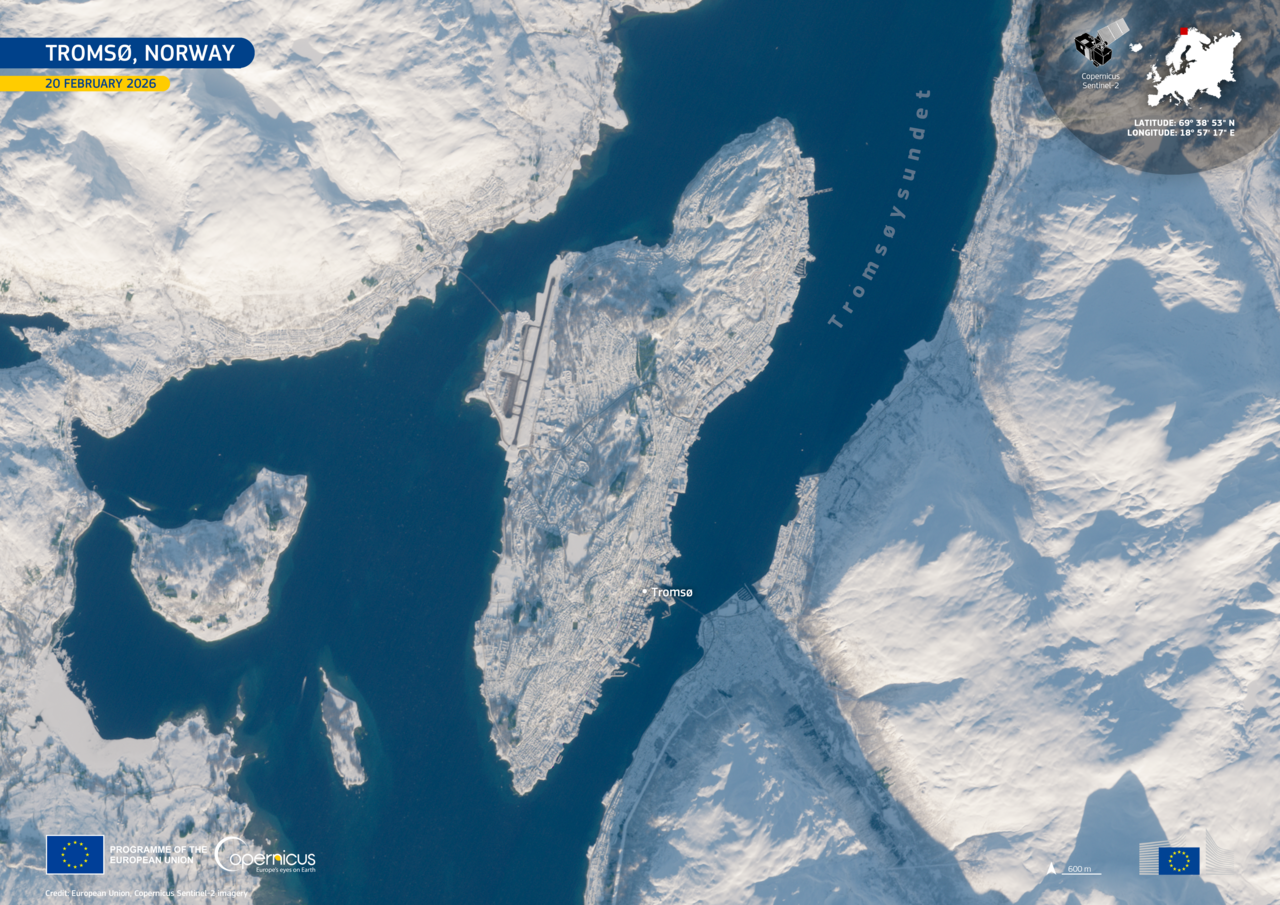
Polar night — the period when the sun does not rise at all — is the most misunderstood phenomenon in Arctic travel. Most people expect total, 24-hour darkness. What they find is something more nuanced and, on the right day, more beautiful: a slow-burning blue twilight that lasts for a few hours around midday, before fading back into night.
This guide explains what polar night actually is, when it occurs in Norway, what to expect during a visit, and why it is not the obstacle to travel that it sounds like.
What Is Polar Night?
Polar night (Norwegian: mørketid — "dark time") occurs when a location is at a sufficiently high latitude that the sun remains below the horizon for the entire 24-hour cycle. It is the winter counterpart of the midnight sun: in summer, the sun never sets above the Arctic Circle; in winter, it never rises.
The key distinction: polar night does not mean total darkness. For most of the polar night period, there is a period of civil or nautical twilight around midday — the sky brightens to a distinct blue and violet, the horizon turns amber, and there is enough light to see clearly without artificial lighting. At the latitude of Tromsø, this twilight window lasts 2-4 hours at peak polar night.
True complete darkness — no twilight at all, full night for 24 hours — only occurs at the most extreme latitudes (northern Svalbard, north of 80°N) during the heart of winter. At the locations most tourists visit (Tromsø, Alta, Kirkenes), the polar night period involves darkness and near-darkness, not absolute lightlessness.
Polar Night Dates in Norway
- Tromsø (69.6°N): 27 November to 15 January — approximately 50 days
- Alta (70°N): 26 November to 16 January — approximately 51 days
- Hammerfest (70.7°N): 21 November to 21 January — approximately 61 days
- North Cape (71.2°N): 18 November to 24 January — approximately 67 days
- Longyearbyen, Svalbard (78°N): 26 October to 15 February — approximately 112 days
Outside these windows, the sun rises but remains low on the horizon, producing long twilight mornings and evenings with relatively short daylight periods in November and late January. By February in Tromsø, there are 4-6 hours of usable daylight, with the days lengthening rapidly toward March.
What Polar Night Looks Like
On a clear day in the heart of polar night (late December in Tromsø), the experience is something like this:
At 08:00: complete darkness, stars visible. The city runs on artificial light. At 10:30: the sky to the south begins to change — a very faint brightening on the horizon, not sunrise but the approaching glow of a sun that will not actually appear. By 11:30: the sky is a deep saturated blue-violet, with the horizon banded in amber and rose. The snow reflects this light, the fjord is visible, and you can take photographs without a flash. By 12:30: the same colours in reverse — the brightness fading back toward blue, then violet, then black. By 14:00: stars again.
The blue hour of polar night is the reason some photographers specifically visit Arctic Norway in December, not despite the darkness but because of it. It is a quality of light that does not exist anywhere at any other time — saturated blue-violet over snow and mountains, for 2-3 hours every day.
Activities During Polar Night
The absence of conventional daylight reorganises activity schedules but does not eliminate them. During polar night, the structure of an Arctic Norway day typically looks like:
- Morning (sleep until 09:00-10:00): Aurora hunting sessions typically run until 01:00-02:00, so mornings start later.
- Late morning to early afternoon: Outdoor activities timed around the twilight window. Dog sledding, snowmobile safaris, snowshoeing, and reindeer tours all operate during this 2-4 hour blue-light period. It is cold (-15°C to -25°C), visually stunning, and quiet — most tourists are not yet moving.
- Afternoon to evening: Indoor time, meals, warming up. Many people visit the Polaria museum (Tromsø), the Northern Lights Cathedral (Alta), or explore the city. Saunas are a significant Norwegian leisure activity and particularly appropriate after outdoor cold exposure.
- Evening: Aurora hunting begins. Guided tours depart from 18:00-20:00. Self-drivers head out when the Kp index rises. The theoretical window is the entire night, but most productive aurora activity is 21:00-01:00.
Does Polar Night Affect Sleep?
Yes, for most people. The combination of extended darkness and the disrupted schedule of aurora hunting (staying up until 01:00-02:00 most nights) pushes sleep into unusual patterns. Many visitors report deep, long sleep — 9-10 hours — that they attribute to the darkness and the cold air. Others find the disruption to circadian rhythm more pronounced.
Practical measures: blackout curtains in accommodation (confirm when booking — some rooms, particularly in cheaper hotels, have poor curtains that let in external artificial light), a sleep mask as backup, and melatonin if jet lag or circadian disruption is a persistent issue. Do not try to maintain a 22:00 bedtime during an aurora hunting trip — the schedule does not support it.
Polar Night vs Northern Lights: Are They the Same?
No — they are related but distinct phenomena. Polar night is the period when the sun does not rise. The northern lights are a geomagnetic phenomenon that occurs when solar wind particles interact with the Earth's atmosphere. Both require darkness to be visible, which is why they overlap in the Arctic winter, but they are independent of each other.
Northern lights can occur throughout the aurora season (late September to late March), not only during polar night. October and March — outside the polar night window in Tromsø and Alta — are often the most productive months for aurora activity due to the equinox effect. Polar night is not required for aurora viewing; complete darkness after sunset is sufficient.
Should You Visit During Polar Night?
Visit during polar night specifically if: you want the full atmospheric immersion of an Arctic winter — the blue twilight, the extended darkness, the weight of the season. December in Tromsø during polar night is a specific, unusual experience that has its own aesthetic character. Many repeat visitors to Arctic Norway rate the polar night period as their favourite time of year.
Consider February or March instead if: you want more daylight for daytime activities, you are travelling with children who struggle with extended darkness, or you want the best statistical combination of aurora activity and clear skies. February and March deliver excellent aurora conditions with the added bonus of 4-8 hours of real daylight for skiing, hiking, and exploring in light.
Frequently Asked Questions
Is it completely dark 24 hours during polar night in Tromsø?
No. There is a 2-4 hour period of civil twilight around midday during which the sky brightens noticeably — enough to see clearly outdoors and take photos in natural light. Total 24-hour darkness only occurs at latitudes above approximately 75-76°N, north of anything tourist-accessible in mainland Norway.
Do people live normally during polar night?
Yes. Norwegian cities above the Arctic Circle function normally during polar night — shops, schools, offices, restaurants, and transport all operate on standard schedules. The adjustment is cultural and physiological, with artificial lighting, vitamin D supplements, and a strong sauna and outdoor recreation culture compensating for the lack of sunlight. Most locals report that they find polar night less oppressive than outsiders expect.
What is Mørketidsdepresjon (polar night depression)?
Seasonal Affective Disorder (SAD) related to extended darkness. It is real and documented in Arctic populations. Norwegian health authorities take it seriously — light therapy lamps are widely available and recommended for extended stays. For a 1-2 week tourist visit, the effect is typically mild or absent — the novelty and the aurora hunting schedule tend to offset the mood effects that accumulate over months of darkness for year-round residents.