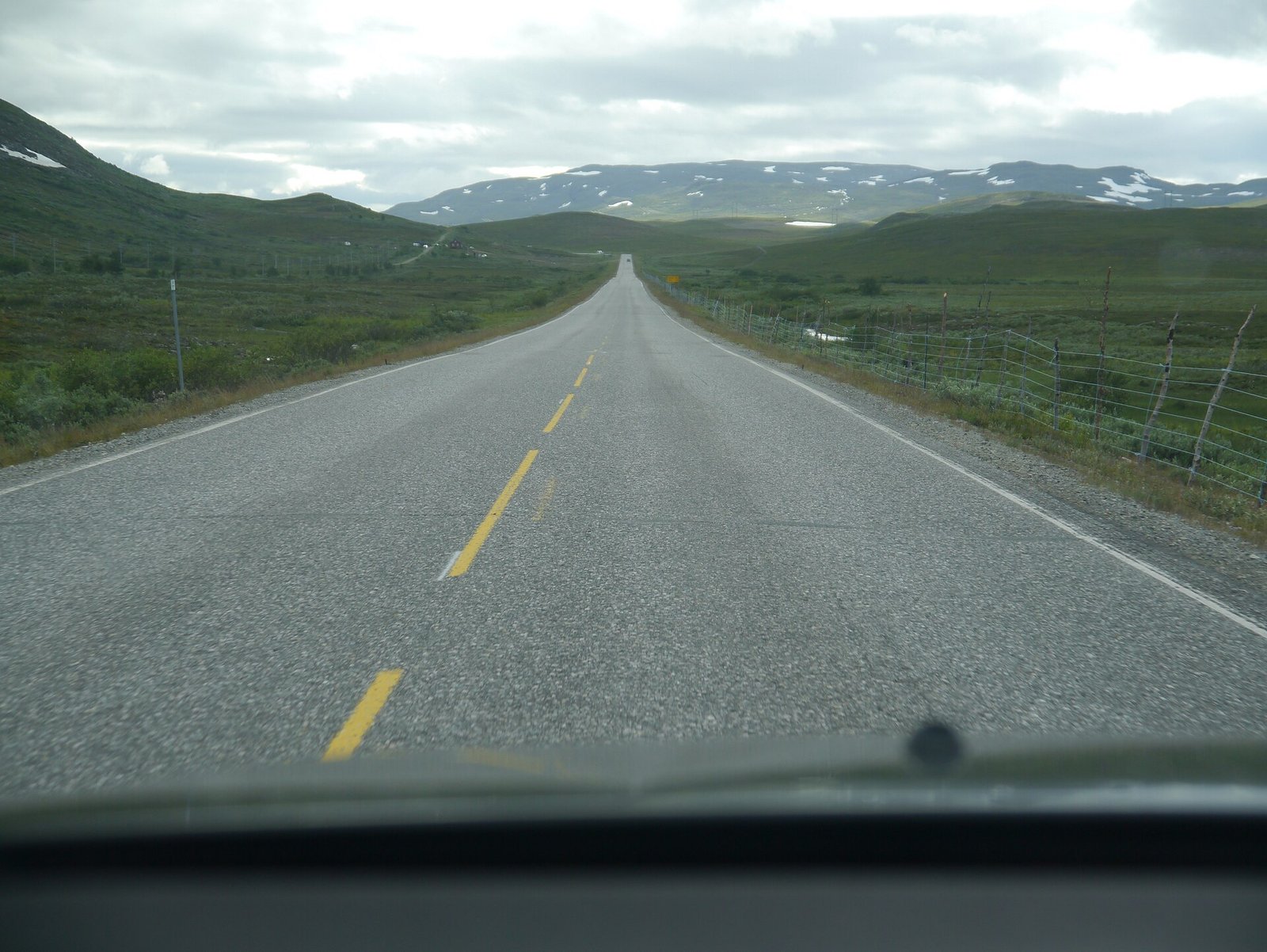
The standard advice for northern lights in Norway is to book a guided tour. The tours are good, the guides know the skies, and they handle the logistics. But self-driving has a genuine advantage that tours can't replicate: you can move exactly when and where you want, stay out as long as you want, and cover ground that minibuses don't reach.
The Core Strategy: Chase Clear Skies
The northern lights forecast (best apps here) gives you two pieces of information: geomagnetic activity (Kp index) and cloud cover. Activity is only half the equation. The bottleneck in Norway is almost always cloud cover. The self-drive advantage is that you can drive 50–100 km inland or along a different coastal exposure to find clear sky.
When you're on a bus tour, you go where the guide decides. In a car, you check the satellite imagery at 9 PM, see a clear patch 60 km northeast, and drive there. That flexibility is worth more than any tour guide's knowledge for most trips.
Which Car to Rent
You need a 4WD or all-wheel-drive vehicle with winter tyres — non-negotiable above the Arctic Circle in winter. Norwegian rental companies (Hertz, Avis, Europcar) at Tromsø, Alta, and Kirkenes airports all have winter-equipped vehicles. Expect to pay €60–100 per day. Automatic transmission is easier in icy conditions. See our winter driving guide for full details on driving safely in Arctic Norway.
- Book 4WD/AWD explicitly — don't assume it's included
- Studded tyres (piggdekk) are better than friction tyres on ice
- Get full insurance (CDW + SCDW) — repair costs are high in the Arctic
- Carry a shovel, tow rope, and emergency blanket
Best Roads for Aurora Chasing Around Tromsø
The E8 east toward Finland is the classic inland escape from coastal cloud. Drive 30–60 km and you're often under clearer skies. Route 91 south toward Lyngen Alps offers dramatic mountain backdrops. The E6 highway gives you enormous range — you can reach Alta (2 hours) if the cloud is persistently bad around Tromsø.
For dark skies with no light pollution, aim for small roads away from towns. The hamlets along Ullsfjorden, the Reisa valley, and the Lyngen peninsula all offer minimal artificial light and good aurora horizons.
Apps and Tools
The essential toolkit for self-drive aurora hunting: Space Weather Live (real-time Kp, oval position), Yr.no (Norwegian meteorological service — most accurate cloud forecasts in the region), and Stellarium for moon phase. The full app guide covers each in detail.
Set Kp alerts at ≥3 on Space Weather Live. When an alert fires, check Yr.no for cloud cover in a 100 km radius. If you see a clear window, drive toward it immediately — cloud forecasts in this region are accurate to about 2 hours but unreliable beyond 6.
Practical Tips for Aurora Nights
- Dress for static outdoor time — you'll be standing still, which is much colder than driving
- Bring a camping chair or blanket — lying on the snow watching overhead is the best view
- Keep the car engine on for heat but park with headlights off pointing away from your viewing direction
- Use a tripod for photos — see aurora photography tips for camera settings
- Tell someone your route if you're heading into remote areas
Cost vs Guided Tour
A typical guided aurora tour in Tromsø costs €120–180 per person. A rental car for one night costs €70–100 total — split between 2–3 people it's €25–50 each. If you're spending 5 nights aurora hunting, the car pays for itself compared to nightly tours. The full cost comparison breaks this down by trip length.