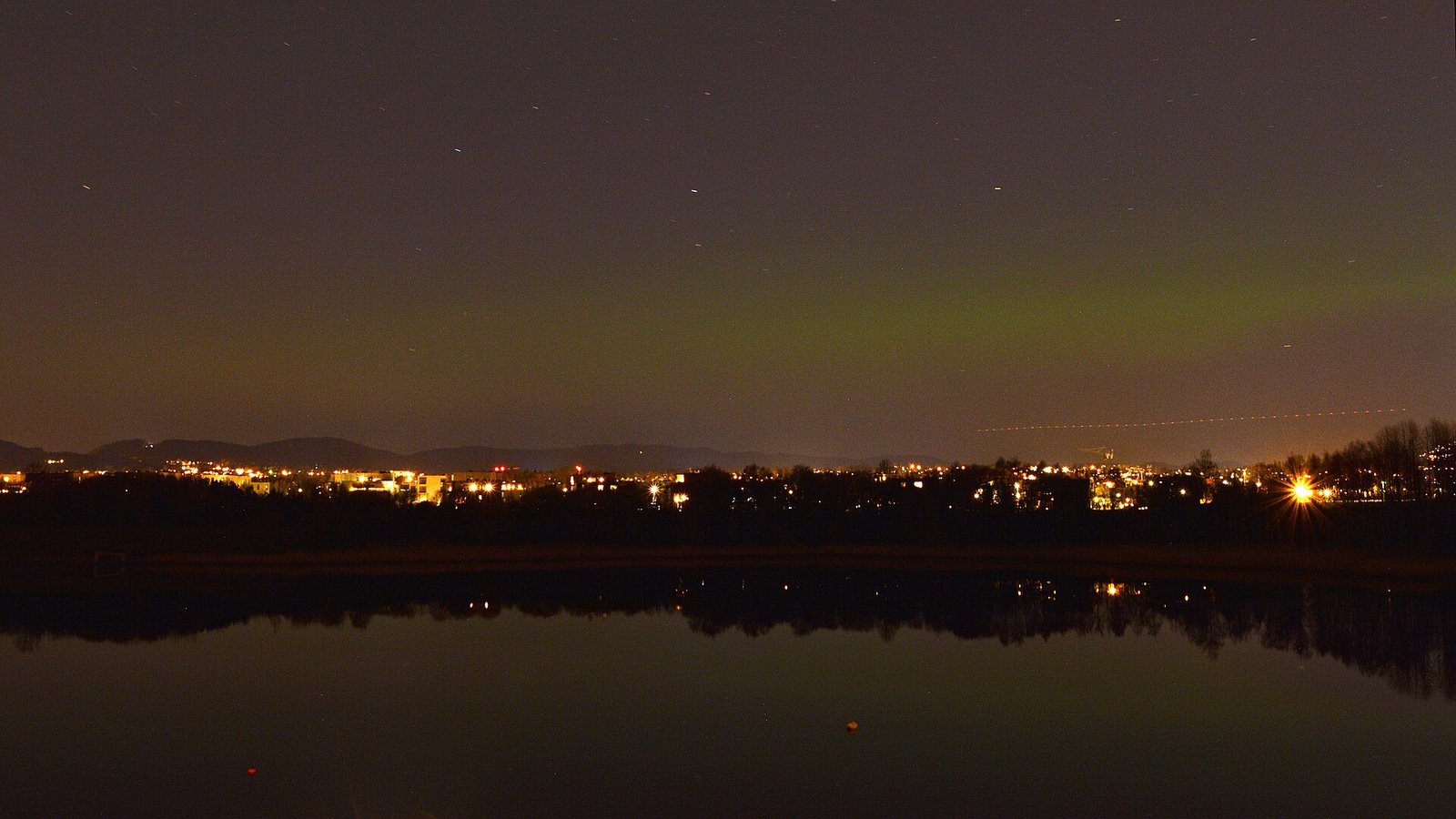
The internet is full of northern lights camera recommendations that are either too vague ("use a camera with good low-light performance") or too gear-obsessed. This guide is practical: which specific camera and lens combinations produce excellent aurora results, what the minimum viable setup looks like, and whether the camera you already own will do the job.
The Honest Assessment
The single most important piece of aurora photography equipment is a tripod, not a camera. A mid-range mirrorless camera on a tripod will outperform an expensive full-frame body held by hand every single time. If you currently have a modern mirrorless or DSLR camera (released 2019 or later) and a tripod, you have what you need.
The upgrade that matters is the lens, not the camera body. A fast wide-angle lens (f/2.8 or faster) on any modern camera produces dramatically better results than a slow lens on the best camera available. If your current kit lens is f/4-5.6 at wide angle and you are planning an Aurora trip, renting or buying a fast wide-angle will improve your results more than any camera upgrade.
Best Mirrorless Cameras for Aurora Photography (2026)
Sony A7 IV (full frame)
The current standard recommendation for serious aurora photography. Excellent high-ISO performance (clean images at ISO 6400, usable at 12800), superb autofocus for daytime Arctic activities, weather-sealing adequate for -15°C, and a deep ecosystem of Sony G-Master lenses including the 16-35mm f/2.8 GM — one of the best aurora lenses available. Price: approximately €2,800 body only.
Nikon Z6 III (full frame)
Nikon's re-entry into mirrorless with a partial stacked sensor produces outstanding low-light performance — arguably the best noise characteristics at high ISO in this price class. Pairs with the Nikon 14-24mm f/2.8 S for an excellent aurora-specific kit. Price: approximately €2,700 body only.
Fujifilm X-T5 (APS-C)
The best crop-sensor option for aurora photography. The X-Trans sensor handles high-ISO noise differently from Bayer sensors — the noise pattern is finer and more film-like. The XF 10-24mm f/4 OIS is the standard wide-angle choice; for aurora specifically the Sigma 10-18mm f/2.8 DC DN adapted to Fuji is the best option. Significantly cheaper than full-frame options at comparable image quality for aurora. Price: approximately €1,800 body only.
Budget option: Sony A6700 (APS-C)
For travellers who want a compact, capable camera at lower cost, the Sony A6700 produces very good aurora images when paired with the Sigma 10-18mm f/2.8 DC DN (approximately €800). Body price: approximately €1,500. The combined cost of body and fast lens (€2,300) is less than a Sony A7 IV body alone, with results that are close in practice.
Best Lenses for Aurora Photography
Lens choice matters more than camera body for aurora photography. The priorities:
- Wide focal length: 14-24mm on full frame, 10-16mm on APS-C. Aurora often spans a significant portion of the sky and wide-angle captures the full scene including foreground.
- Fast maximum aperture: f/2.8 or faster. This is the most important spec — a stop of aperture is worth 1 stop of ISO, which is significant at -15°C when battery performance is already degraded.
- Manual focus ring: Smooth, precise manual focus is required because autofocus doesn't work in darkness. Most modern lenses have this; check that the manual focus ring does not have too much play.
Top lens choices
- Sigma 14mm f/1.8 DG HSM Art (full frame, Canon/Nikon/Sony): The fastest wide-angle prime available. f/1.8 gives you 1.5 stops over f/2.8 — extremely useful for faint aurora. Expensive (€1,300) and heavy.
- Sony FE 14mm f/1.8 GM: Native Sony mount, f/1.8, excellent sharpness. €1,600. The best Sony-native aurora lens.
- Tamron 17-28mm f/2.8 Di III RXD: More affordable full-frame f/2.8 zoom for Sony E-mount. €800. Good optical quality and significantly cheaper than the Sony G-Master equivalent.
- Sigma 10-18mm f/2.8 DC DN Contemporary: The best value APS-C aurora lens. Available for Sony E, Fuji X, and L-mount. €800. Compact, fast, optically excellent.
Using Your Smartphone for Aurora
If you are not buying a dedicated camera for this trip, the iPhone 15 Pro/Pro Max, Samsung Galaxy S24 Ultra, and Google Pixel 8 Pro all produce publishable aurora photos in Night Mode on a tripod. Limitations: more noise, less dynamic range, less control over settings. Strengths: always with you, no additional bag weight, genuinely capable in good conditions (Kp3+, clear sky).
The single accessory that transforms phone aurora photography: a small travel tripod with a phone adapter. A Joby GorillaPod (€40-60) is the lightest option. Without a stable support, phone aurora photos are blurred regardless of Night Mode capabilities.
Do You Need to Buy New Gear?
If you currently own a mirrorless or DSLR camera from 2019 or later with a lens faster than f/4 at wide angle: no. Test it by taking 10-second exposures of the night sky in your home location. If the stars are sharp (not trailed) and the sky has some detail, your setup works for aurora.
If your current setup has a kit lens at f/4-5.6: consider renting a fast wide-angle for the trip rather than buying. Renting a Sony 14mm f/1.8 GM or Sigma 14mm f/1.8 Art for a week costs approximately €80-150 from specialist rental shops — significantly less than buying and selling.