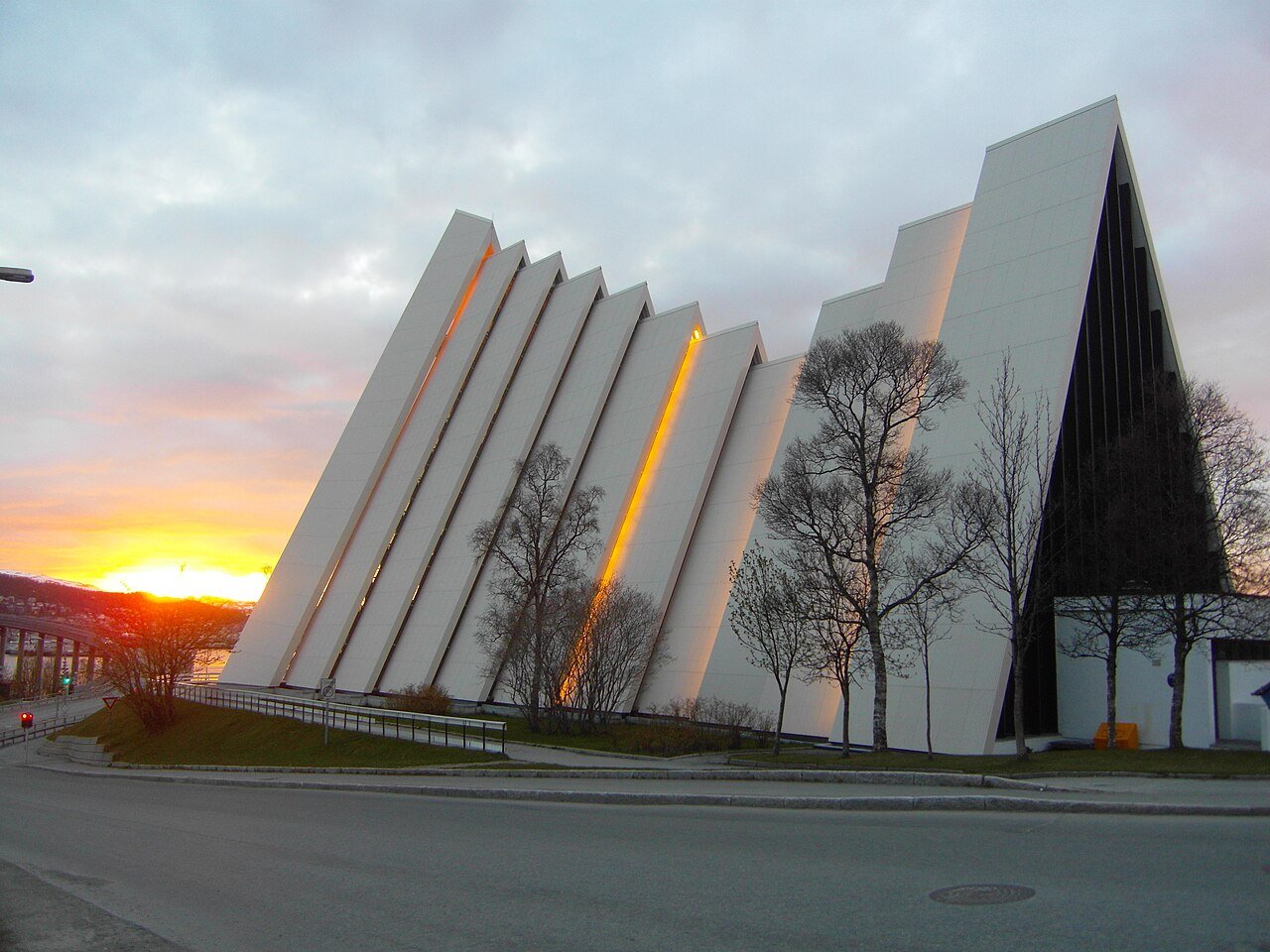
The midnight sun is one of those phenomena that sounds poetic in theory and turns out to be genuinely disorienting in practice. At 70°N in late June, the sun does not set. It skims the horizon at midnight, turns the sky shades of amber and rose, and then climbs again. Your body, receiving full sunlight at 1am, stops understanding when it is supposed to sleep.
This guide covers the midnight sun in Arctic Norway — when and where to see it, how it affects travel logistics, the best locations for the iconic photographs, and what polar night (the opposite phenomenon) means for winter visitors.
The midnight sun technically begins in mid-May in the far north — see our Norway in May guide.
July is the peak midnight sun month — for what to do and where to go, see our Norway in July guide.
What Is the Midnight Sun?
The midnight sun occurs when the sun remains above the horizon for 24 consecutive hours — the result of Earth's axial tilt during summer at high latitudes. Above the Arctic Circle (66.5°N), there is a period every year when the sun simply does not set. The further north you go, the longer this period lasts.
- At Tromsø (69.6°N): midnight sun from approximately 20 May to 22 July — about 63 days.
- At Alta (70.0°N): midnight sun from approximately 16 May to 26 July.
- At North Cape (71.2°N): midnight sun from approximately 14 May to 29 July.
- At Svalbard (78°N): midnight sun from mid-April to late August — roughly 4 months.
At the latitude of Tromsø, the sun at midnight in late June is approximately 2-5 degrees above the horizon — not high in the sky, but unambiguously above it, casting long golden shadows and a light quality that does not exist at lower latitudes at any time of day.
Best Places to See the Midnight Sun in Norway
Any location above the Arctic Circle in Norway will experience the midnight sun in summer. But some locations produce more dramatic experiences than others, both in terms of landscape and accessibility.
North Cape (Nordkapp)
The North Cape is the most iconic midnight sun destination in Norway — a 307-metre cliff above the Arctic Ocean where you can watch the midnight sun from the very edge of the European mainland. At the summer solstice (June 21), the sun at midnight appears to rest on the horizon for several minutes before rising again, with the open sea stretching uninterrupted to the north. The visitor centre at the Cape hosts midnight sun concerts and events during peak summer season. This is the single most dramatic natural vantage point for the experience in mainland Europe.
Tromsø
Tromsø is well-positioned for midnight sun viewing with the Fjellheisen cable car giving access to the plateau above the city, where you can watch the sun from above the fjord. The city itself hosts a Midnight Sun Marathon in June — an internationally recognised race that starts at midnight in full sunlight. The marathon brings a specific atmosphere to the city that is worth experiencing if your schedule allows.
Lofoten Islands
The Lofoten Islands technically sit just below the Arctic Circle at their southernmost point, but the main islands extend above it. The midnight sun here is particularly photogenic because the dramatic mountain peaks, calm fjord water, and traditional red fishermen's cabins (rorbuer) create an unmatched landscape. If photography is the goal, Lofoten in June produces some of the most recognisable midnight sun images from Norway.
Svalbard
For those who want the full uninterrupted midnight sun without any seasonal variation in day length, Svalbard offers 24-hour sunlight from mid-April to late August. The landscape — glaciers, tundra, and polar bear territory — is categorically different from mainland Norway. Longyearbyen is the main settlement and the base for guided wilderness expeditions during the midnight sun season.
Midnight Sun vs Polar Night: Understanding Both Phenomena
The midnight sun and polar night are two sides of the same phenomenon — the consequence of Earth's axial tilt at high latitudes. Winter brings polar night: the sun does not rise above the horizon at all, for periods ranging from a few days (just above the Arctic Circle) to four months (Svalbard).
Polar night dates at key Norwegian locations
- Tromsø: polar night from 27 November to 15 January — approximately 50 days without sunrise.
- Alta: polar night from 26 November to 16 January.
- North Cape: polar night from 18 November to 24 January — approximately 67 days.
- Svalbard: polar night from 26 October to 15 February — approximately 112 days.
"Polar night" does not mean total darkness for the entire period. During the polar night, there is a period of civil or nautical twilight around midday — the sky brightens to a deep blue or grey for a few hours even when the sun is below the horizon. This twilight light is distinctive and beautiful, and is one of the reasons winter photography in Arctic Norway has its own aesthetic character. True 24-hour darkness occurs only at the most extreme latitudes (northern Svalbard) at the heart of winter.
Practical Impact on Summer Travel
Sleep disruption
The single most underestimated challenge of midnight sun travel is sleep disruption. Full sunlight at 2am is not a minor inconvenience — it fundamentally disrupts circadian rhythms within 2-3 days. Standard hotel rooms in Arctic Norway have blackout curtains specifically because this is a known problem. Check this when booking: "blackout curtains" or "mørke gardiner" should be confirmed, not assumed.
A sleep mask is worth packing even if you are staying in hotels that claim blackout curtains — gaps around the edges, or curtains that are not fully opaque, are common. Melatonin (available OTC in most European countries) helps reset circadian rhythm for some travellers in the first few days.
The freedom the midnight sun gives
The positive side of 24-hour daylight is that it completely frees your schedule. Hike at 11pm. Drive to the North Cape at midnight. Fish at 3am. The light is always there, the parks and roads are open, and the landscape in the golden midnight hour is extraordinary. The midnight sun allows an intensity of activity — physical and experiential — that is not possible with normal day/night constraints.
Temperature and mosquitoes
Arctic Norway in summer is not cold. July temperatures in Tromsø average 13-15°C, with occasional warm spells reaching 20°C. The Finnmark plateau can be warmer inland — Alta has recorded temperatures above 30°C in summer. This is not a winter-gear destination in July.
Mosquitoes are, however, genuinely problematic in the inland plateau and tundra areas in July. The Finnmark plateau in peak summer has dense mosquito populations around lakes and wetlands. Deet-based repellent and a midges-proof hat are worth including if you plan to spend time outdoors away from the coast.
Midnight Sun vs Northern Lights: Which Season Should You Visit?
This is the most common question from first-time visitors to Arctic Norway. The honest answer is that they are completely different experiences, and which you choose depends on what you are actually looking for.
Visit in winter (October-March) if: you want to see the northern lights, you want the full Arctic winter experience (snow, ice, dog sledding, snowmobile), or you specifically want to experience polar night and the blue twilight of a midwinter Arctic day.
Visit in summer (June-July) if: you want the midnight sun, you want warmer temperatures and easier outdoor conditions, you want longer hiking seasons, or you are arriving with children who will struggle with the cold and darkness of winter.
Both seasons are extraordinary. Neither is a compromise version of the other. They are simply different places at different times of year — connected by location, not by experience.
Frequently Asked Questions
What time does the sun set in Norway in summer?
Above the Arctic Circle (Tromsø and further north), the sun does not set from approximately mid-May to late July. Below the Arctic Circle but in northern Norway (for example Mo i Rana, just south of the Circle), the sun still sets but only for 1-3 hours, producing extremely long twilight conditions. Oslo in June has sunset around 22:00 and sunrise around 04:00.
Can you see the midnight sun from Oslo?
No. Oslo is at 60°N, well below the Arctic Circle. In summer Oslo has very long days (sunrise before 04:00, sunset after 22:00), but the sun still sets. The midnight sun requires being above the Arctic Circle (66.5°N minimum).
Is it worth travelling north specifically for the midnight sun?
Yes, if combined with other activities. Travelling solely to look at the midnight sun for an hour and leave is not a particularly rewarding trip — the experience takes a day or two to fully absorb and is best combined with hiking, kayaking, fjord cruises, or the road trip to the North Cape. Build at least 5 nights into a midnight sun-focused trip.
Is the midnight sun visible every night in summer?
The sun is above the horizon every night from mid-May to late July above the Arctic Circle, yes. What varies is whether you can see it clearly — cloud cover can completely obscure the sun, leaving only a general brightness. June at the solstice is when the sun is highest at midnight and most dramatic; clear sky nights are more common in June than in July when autumn weather patterns begin.