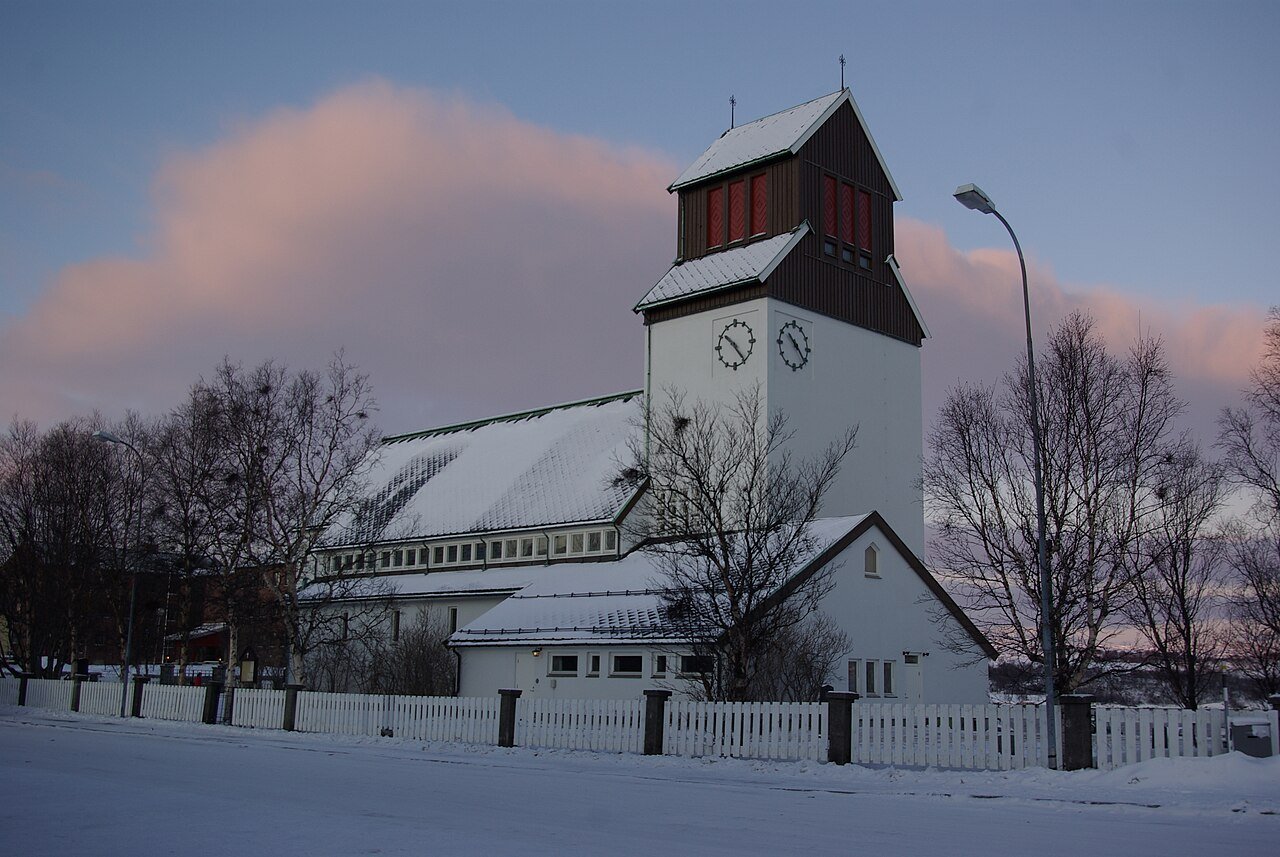
Kirkenes sits at 69.7°N, 15km from the Russian border, at the end of the E6 — Norway's main Arctic highway. It is the last stop on the Hurtigruten coastal ferry route, 2,500km from Bergen. In winter, it is one of the most remote and distinctive destinations in Europe.
Kirkenes is not Tromsø. It has no celebrity status, no Midnight Sun Marathon, no airport full of aurora photographers. What it has is a genuine Arctic frontier character, unique experiences (king crab safaris, snowhotel, Russian border proximity), and consistently cold, clear winters that produce excellent aurora conditions.
Why Visit Kirkenes in Winter?
Three things set Kirkenes apart from other Arctic Norway destinations:
The most iconic place to sleep in Kirkenes is the Snowhotel — full details in our Kirkenes Snowhotel guide.
- King crab safaris: The Barents Sea is home to the largest population of king crabs in the world — a species introduced from the Russian Pacific. Kirkenes is the only place in mainland Norway where you can go ice fishing for king crabs in winter. This is not a tourist gimmick: the crabs are real, large (leg span up to 1.5m), and delicious.
- The snowhotel: Kirkenes Snowhotel is rebuilt each winter from local snow and ice. Rooms are carved with different themes each year, the temperature inside is -4°C to -7°C regardless of outside conditions, and sleeping in a reindeer-skin sleeping bag on a block of ice is a genuinely memorable experience.
- Border proximity: Kirkenes's proximity to Russia gives it a distinct cultural character — there are Russian-language signs, Soviet-era architecture influences, and a population with mixed Norwegian-Finnish-Sami-Russian heritage. The border itself was, until recently, accessible for organised visits. Check current access conditions before travel.
King Crab Safari: What to Expect
The king crab safari is Kirkenes's signature experience. Tours operate from November to April, when the fjord is ice-covered and accessible by snowmobile or snowcat.
The process: drive or snowmobile to the fjord ice, drill holes through the ice (1.2-1.5m thick in midwinter), lower traps, wait 20-30 minutes, and haul the traps. The crabs are enormous — a single crab can weigh 3-4kg and have a leg span wider than your arm span. After the catch, return to a heated hut where the crabs are cooked and served immediately with bread and butter.
The tour typically lasts 2-3 hours total and costs €100-160 per person. The meal included is one of the best Arctic food experiences available — king crab legs cooked within an hour of being caught, in a hut surrounded by Arctic winter, is not something easily replicated elsewhere.
Kirkenes Snowhotel
The Kirkenes Snowhotel is one of Norway's most unique accommodation options. Constructed annually from snow and ice harvested locally, it opens in late December and remains operational until April, when the structure gradually melts. Each room is carved with a different theme — Arctic wildlife, indigenous patterns, local history — and illuminated with coloured light.
Sleeping in the snowhotel requires a specific mindset. The room temperature is a stable -4°C to -7°C. You sleep in an expedition-grade sleeping bag on a reindeer hide over an ice block bed. The experience is genuinely cold — most guests report sleeping well once acclimatised, but a brief period of adjustment is normal. Earplugs are recommended; the snowhotel is popular and neighbours are close.
Cost: €250-400 per person per night for snowhotel accommodation, including sleeping bag rental, a warm-up room for changing, breakfast in a heated building, and typically a glass of aquavit in the ice bar. Regular heated hotel rooms are available in the same complex for those who prefer warmth without sacrificing the atmosphere.
Northern Lights in Kirkenes
Kirkenes sits at the same latitude as Tromsø but further inland and east — its weather is more influenced by the continental Russian climate than the Atlantic. This means colder temperatures but frequently clearer skies. Kirkenes regularly has clear nights when Tromsø is clouded over.
The aurora viewing infrastructure is less developed than in Tromsø — fewer dedicated tour operators, smaller selection of guided chase tours. But the conditions themselves are excellent, and many visitors find their best aurora sightings happen spontaneously, simply stepping outside the hotel at night on a clear evening.
Getting to Kirkenes
Kirkenes Airport (KKN) has daily connections to Oslo via SAS and Norwegian, and connects to Tromsø and other northern Norwegian cities via Widerøe. Flying time from Oslo: approximately 2.5 hours. From Tromsø: approximately 1 hour.
The Hurtigruten coastal ferry calls at Kirkenes — it is the northern terminus of the route. The southbound return journey from Kirkenes takes 11 days to Bergen and is an experience in itself, but is typically a summer choice.
Driving from Alta: approximately 470km via the E6, 5-6 hours. A possible route for those doing a full Finnmark road trip, but most visitors fly into Kirkenes directly.
Other Winter Activities in Kirkenes
- Snowmobile to the Russian border: Guided snowmobile tours run to the marked Norwegian-Russian border along the frozen Pasvik River. The tours include information on the border history and the unusual geopolitics of this part of the Arctic.
- Reindeer sledding: Sami reindeer herding families in the Kirkenes area offer traditional reindeer sled experiences, often combined with cultural information about the indigenous Sami and Kola Sami (Russian) herding traditions.
- Dog sledding: Available from operators outside Kirkenes, though the selection is more limited than in Tromsø or Alta.
- Snowshoeing: The forests and frozen rivers around Kirkenes are well-suited for guided snowshoe tours — quieter and more physically meditative than motorised activities.
- Pasvik Valley: A protected wilderness area south of Kirkenes, known for brown bear and elk populations. Winter wildlife tours are available with experienced guides.
Kirkenes in Summer
In summer, Kirkenes transforms completely. The midnight sun illuminates the Varanger Fjord from May to July, and the area becomes a destination for birdwatching (the Varanger Peninsula is one of Europe's premier birding sites), fishing, and the Pasvik Valley wildlife. The landscape is green tundra and birch forest rather than snow. Both seasons are worthwhile; they are simply different places at different times of year.
Frequently Asked Questions
Is Kirkenes worth visiting without the snowhotel?
Yes. The king crab safari alone justifies the trip for many visitors, and the broader Finnmark character of the area is rewarding. The snowhotel adds significantly to the experience but is not the only reason to go.
How cold is Kirkenes in winter?
Kirkenes is colder than Tromsø. Average January temperatures are -12°C to -18°C, with lows reaching -25°C or colder during cold snaps. Being further inland and closer to continental Russia means less maritime moderation of temperature. Dress for -25°C and you will be comfortable in all but the most extreme conditions.
How many nights in Kirkenes?
Two to three nights covers the main experiences: one night in the snowhotel, a king crab safari, and a snowmobile or dog sledding excursion. Four nights gives more flexibility for weather-dependent activities and a second aurora hunt if the first night is clouded. Most visitors combine Kirkenes with Tromsø or Alta in a wider Finnmark circuit.