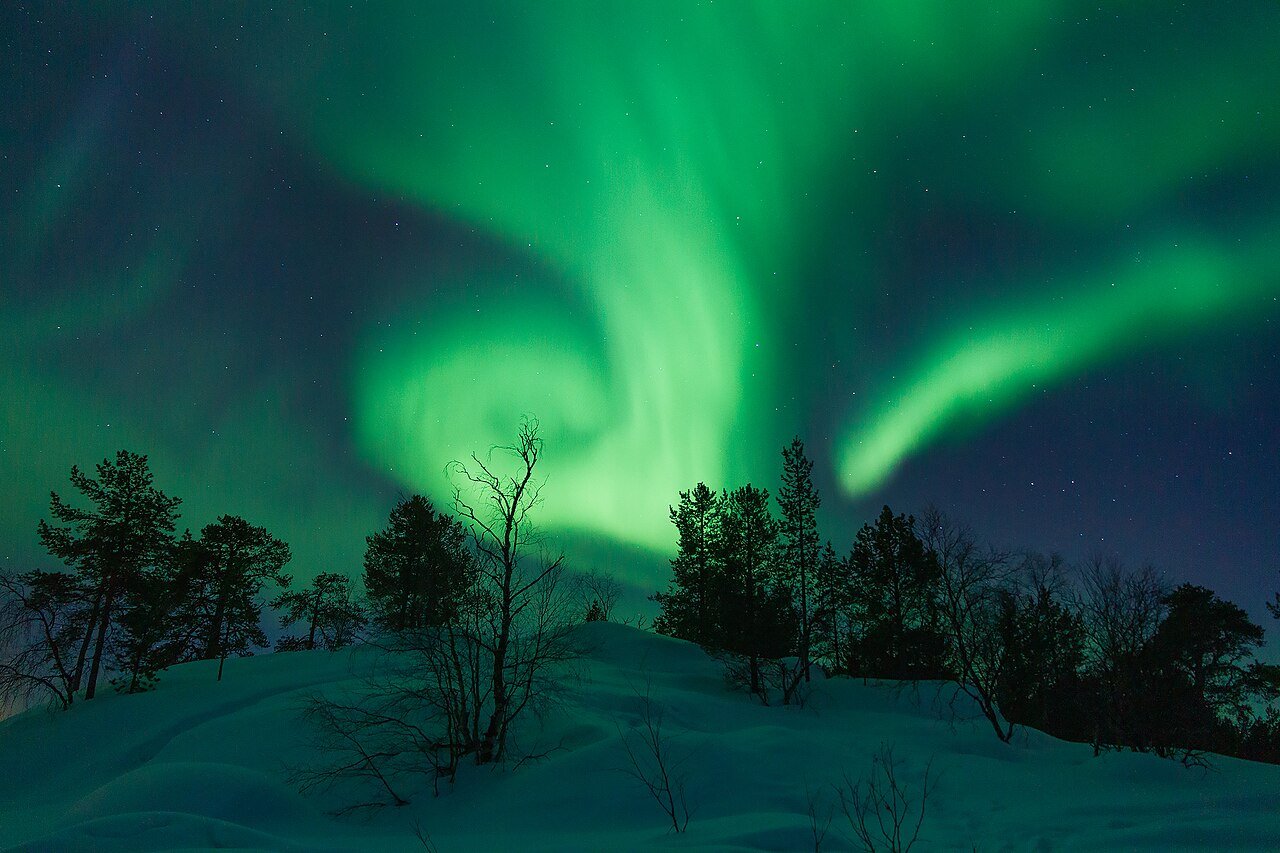
Both Norway and Finland sit squarely under the northern lights oval — geomagnetically, neither country has a significant advantage over the other. The real differences are in landscape, infrastructure, cost, activities, and what kind of experience you want. This guide breaks down the key factors so you can make the right choice.
Aurora Viewing Conditions
The aurora oval passes through both countries at roughly the same latitude. Tromsø (Norway) and Rovaniemi or Saariselkä (Finland) all get similar amounts of geomagnetic activity. The bigger factor is weather: Norway's coast is affected by Atlantic storm systems and can have persistent cloud cover. Finnish Lapland sits in a more continental climate zone and gets more clear nights per month on average — particularly in midwinter.
If maximising clear-sky chances is your priority, Finnish Lapland has an edge. If you want aurora AND other experiences (fjords, whale watching, dramatic coastal scenery), Norway wins clearly.
Landscape and Scenery
This is where Norway pulls decisively ahead for most travellers. Norwegian Arctic landscapes are dramatic — fjords, mountains, coastal islands, fishing villages. The scenery is photogenic from every angle. Finnish Lapland is beautiful in its own way — vast snow-covered forests, frozen lakes, reindeer everywhere — but it's flatter and more homogeneous. Norway offers more visual variety.
- Norway: fjords, coastal islands, dramatic mountains, fishing villages
- Finland: vast boreal forest, frozen lakes, open tundra, reindeer farms
- Both: deep snow, genuine Arctic atmosphere, Sami culture (in different forms)
Activities
Both countries offer dogsled tours, snowmobile safaris, and reindeer experiences. Norway adds options that Finland can't match: whale watching, coastal boat trips, king crab safaris, and fjord cruises. Finland counters with better access to traditional Sami reindeer herding villages and the Santa Claus industry (Rovaniemi) if that's relevant.
For serious outdoor adventure — skiing, snowshoeing in dramatic terrain, sea kayaking under the aurora — Norway is the stronger destination. For relaxed cabin stays, lake saunas, and forest snowshoeing, Finland is equally good and often cheaper.
Cost Comparison
Norway is more expensive. Accommodation in Tromsø in January costs 30–50% more than equivalent quality in Rovaniemi. Food and drink are significantly pricier in Norway. Guided aurora tours run €150–300 per person in both countries, but Norway's activity range (boat tours, etc.) pushes overall trip costs higher.
A realistic 5-night budget for northern lights, accommodation, one guided tour, and daily food: Norway €1,200–1,800 per person. Finland €900–1,300 per person. See our full Norway cost guide for a detailed breakdown.
Getting There
Tromsø is well-connected from UK, Germany, Netherlands and Scandinavia. Finnish Lapland (Rovaniemi, Ivalo, Kittilä) has charter flights from the UK in winter, making it accessible without a Helsinki stopover. Norway's connections are generally better year-round.
The Verdict
Choose Norway if: you want the most dramatic landscapes, you're combining aurora with other Arctic activities, or this is a once-in-a-lifetime trip where you want everything.
Choose Finland if: budget is the primary constraint, you specifically want the forest/lake cabin atmosphere, or you're less interested in the coastal scenery. For a Norway-specific overview, read our best time to see northern lights in Norway guide.