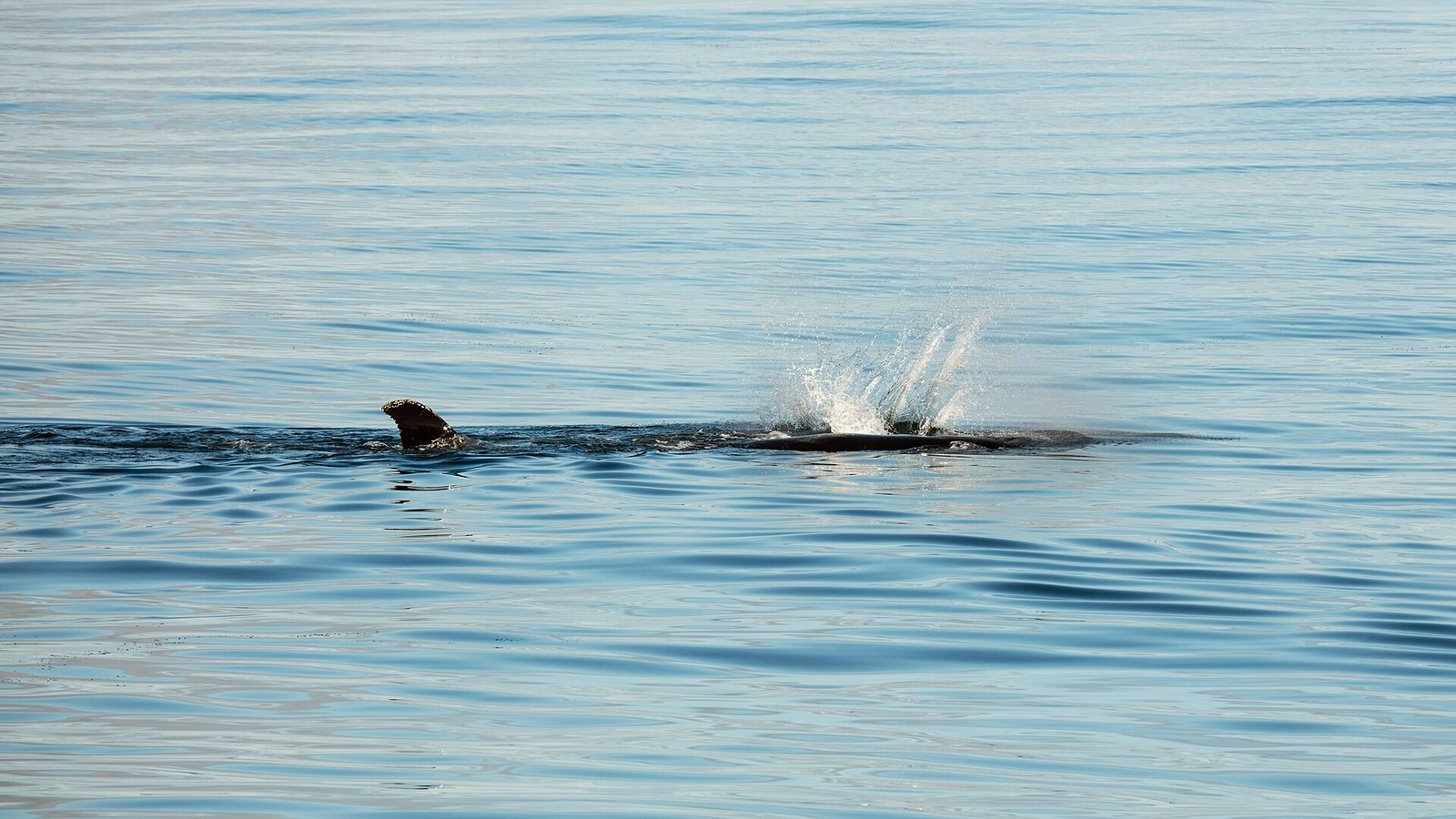
Every autumn, the herring that spent summer in the open Barents Sea migrate south into the sheltered fjords around Tromsø and Senja to overwinter. They are followed by orcas (killer whales) and humpback whales in numbers that make northern Norway one of the most reliable whale watching locations in the world for this specific season.
The Season: November to January
The herring and whale migration into the Tromsø fjords typically begins in late October and peaks from November through January. The location changes week to week — the herring move and the whales follow. In some years the best concentrations are in Kaldfjord (west of Tromsø), in others Skjervøy (north), or Senja (south). Operators track the herring and adjust their routes daily.
The season ends when the herring move back to open water, usually by late January or February. There is no reliable whale watching near Tromsø in summer — this is an exclusively winter experience.
What You Actually See
Orcas
The orcas that visit the Tromsø fjords are the Norwegian-Icelandic herring-eating ecotype — a genetically distinct population from the mammal-eating orcas found in other parts of the world. These are large family groups (pods of 10-30 individuals) that use coordinated carousel feeding to concentrate and stun herring. Watching a pod of 20 orcas execute a coordinated feeding spiral from 20 metres away on a small boat is an experience with few equivalents in wildlife watching anywhere.
Humpback whales
Humpbacks are present in the same areas as the orcas. They are larger (12-15m), slower, and more predictable in their surfacing patterns. Their frequent breaching (launching fully out of the water) and tail-slapping make them exceptional photographic subjects. It is common to see both orca and humpback in the same 4-hour tour.
Choosing a Tour Operator
Tromsø has a dozen or more whale watching operators, ranging from large catamaran vessels (60-100+ passengers) to small RIB inflatables (8-12 passengers). The choice determines the character of the experience:
- Large vessel: Warm, comfortable, catered. Good for families and people who get seasick easily. Less agile in following whales. Cost: €80-100 per person.
- Small RIB (rigid inflatable boat): Cold, wet, and close to the water. Full immersion suits are provided and required. The RIB can approach feeding events more closely and responds faster to orca movements. The most intense experience. Cost: €100-150 per person.
- Hybrid inflatable boat (12-20 passengers): A middle ground — faster and more manoeuvrable than a large vessel, but with some weather protection and space. Increasingly common format.
Booking: When and How
Book 2-4 weeks ahead for peak season (November-December). The best small-group RIB tours fill fast. Cancellations due to bad weather are common — most operators offer a full refund or free rebooking if they cancel. If you cancel yourself, policies vary: check the terms carefully.
Tour departure times are typically 07:00-09:00 to maximise the available daylight (3-4 hours in November-December). Tours last 4-7 hours. Return by early afternoon, leaving the evening free for aurora hunting.
What to Wear
On a large vessel: standard winter clothing is sufficient — the boat is heated inside. On a RIB: the operator provides a full immersion suit that goes over your clothing. Underneath, wear your normal Arctic winter layers. The suit keeps you dry; your own insulation keeps you warm.
Seasickness medication: if you are prone to motion sickness, take it 1-2 hours before departure. The Tromsø fjords are sheltered but not entirely calm, and a 4-7 hour boat trip in Arctic conditions is enough to cause problems for sensitive individuals.
Frequently Asked Questions
Is whale watching in Tromsø guaranteed?
No sighting is ever guaranteed, but success rates in peak season are very high — most established operators report 90%+ sighting rates in November-December when the whales are present. The herring-following whales are concentrated and relatively predictable compared to open-ocean whale watching. If the operator cannot find whales, most offer a free return trip.
Can you see the northern lights on a whale watching tour?
Tours depart early in the morning and run during what limited daylight exists. Aurora viewing requires darkness. There is no overlap — whale watching is a daytime activity and aurora hunting is an evening/night activity. They complement each other perfectly on a multi-day Tromsø trip.