Vesterålen is the archipelago that sits north of Lofoten and is consistently overlooked in favour of its more famous neighbour. This is an unforced error by most Norwegian itinerary planners: Vesterålen has better whale watching than anywhere else in Norway, the world's largest concentration of white-tailed sea eagles, excellent northern lights conditions, and a fraction of the crowds.
Whale Watching in Vesterålen
Andenes, on the northern tip of Vesterålen's Andøya island, is Norway's undisputed whale watching capital. The continental shelf drops steeply very close to shore here, bringing sperm whales (and in winter, orca) within easy boat reach. Whale sightings are guaranteed by most operators or they refund your ticket. The combination of sperm whale diving behaviour, high viewing frequency, and dramatic coastal setting makes Andenes one of the world's best whale watching destinations. Norway whale watching guide for seasonal comparison.
Sea Eagle Safari
The white-tailed sea eagle — Europe's largest eagle with a wingspan reaching 2.5 metres — is present year-round in Vesterålen and reaches its highest concentrations here. Dedicated sea eagle safari boats operate from Stokmarknes and Sortland, with near-certain sightings in winter months when the eagles congregate around fishing grounds. This is one of the experiences that makes Vesterålen distinct from anywhere in Lofoten.
Northern Lights in Vesterålen
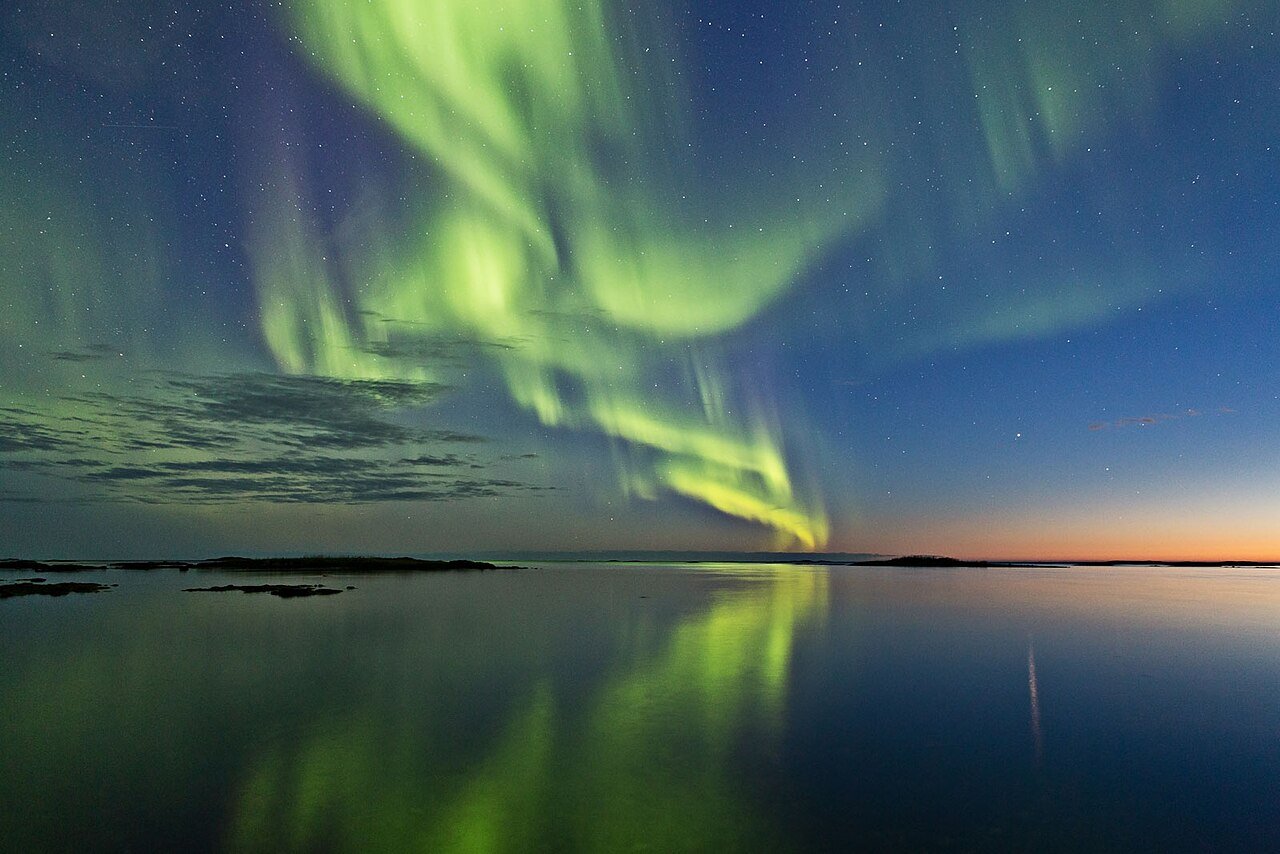
Vesterålen sits at 68–69°N — above the Arctic Circle and in the aurora oval. The open northern coastline faces the sea without obstruction, and the low population density keeps light pollution minimal. Aurora season runs October through March with the same statistics as Tromsø. The coastal exposure means some cloud risk, but the fishing harbour foregrounds and open water reflections create compelling compositions.
Getting to Vesterålen
Fly to Harstad/Narvik airport (EVE) or Stokmarknes (SKN) from Oslo or Bodø. Vesterålen is also reachable by driving north from Lofoten via the E10 and the Lofast tunnel. The 7-day Arctic itinerary can be extended to include both Lofoten and Vesterålen — budget an extra 2–3 nights.
Vesterålen vs Lofoten
Lofoten wins on scenery and photography backdrops. Vesterålen wins on wildlife, authenticity, and the absence of crowds. The ideal Norwegian islands trip combines both: 3 nights in Lofoten for the scenery, 2–3 nights in Vesterålen for whale watching and eagles. The Lofoten northern lights guide covers the other half of the equation.
Best Time to Visit Vesterålen
Sperm whales are present year-round in the deep waters off Andøya, but humpback and fin whales peak between November and January. Northern lights season runs from late September through March, with the darkest, clearest windows in December and January.
Summer (June–August) brings midnight sun and calmer seas — better for sea eagle tours and hiking, but no aurora. Shoulder months like October and April balance reasonable weather with lower crowds and prices.
What It Costs
Whale watching tours from Andenes typically run 895–1,200 NOK (roughly £65–£90 / $80–$110) per adult. Sea eagle safaris from Stø cost around 700–900 NOK. Northern lights boat tours range from 900 to 1,400 NOK depending on duration.
Budget accommodation in Sortland or Andenes starts around 750 NOK per night for a guesthouse room. Renting a car from Evenes airport for a week costs approximately 4,000–6,000 NOK, which is essential since public transport between islands is limited.
When to Book
Whale watching slots fill fast in November and December — book at least 6–8 weeks ahead if visiting during peak whale season. Sea eagle tours operate with smaller boats and have very limited capacity; advance booking of 2–4 weeks is standard even in low season.
Northern lights tours are weather-dependent and sometimes cancelled with short notice. Choose operators that offer rebooking or refund policies, and plan at least 4–5 nights to improve your chances of a clear sky.
What to Pack
Temperatures in Vesterålen drop to -10°C to -15°C in winter, with wind chill pushing it lower on the water. Thermal base layers, a windproof outer shell, waterproof gloves, and insulated boots rated to at least -20°C are non-negotiable for boat tours.
- Merino wool base layers (avoid cotton)
- Waterproof trousers for whale watching decks
- Balaclava and neck gaiter
- Hand warmers for camera equipment
- Headlamp with red-light mode for aurora photography
Common Mistakes to Avoid
Underestimating driving times is a frequent problem. Roads between islands involve bridges, tunnels, and ferry crossings — the drive from Sortland to Andenes alone takes about 1 hour 45 minutes in good conditions, longer in snow.
Many visitors book only one or two nights, which rarely leaves enough time for weather delays on tours. A minimum of five nights gives you realistic flexibility. Checking the Norwegian Meteorological Service (yr.no) daily is standard practice for planning outdoor activities here.