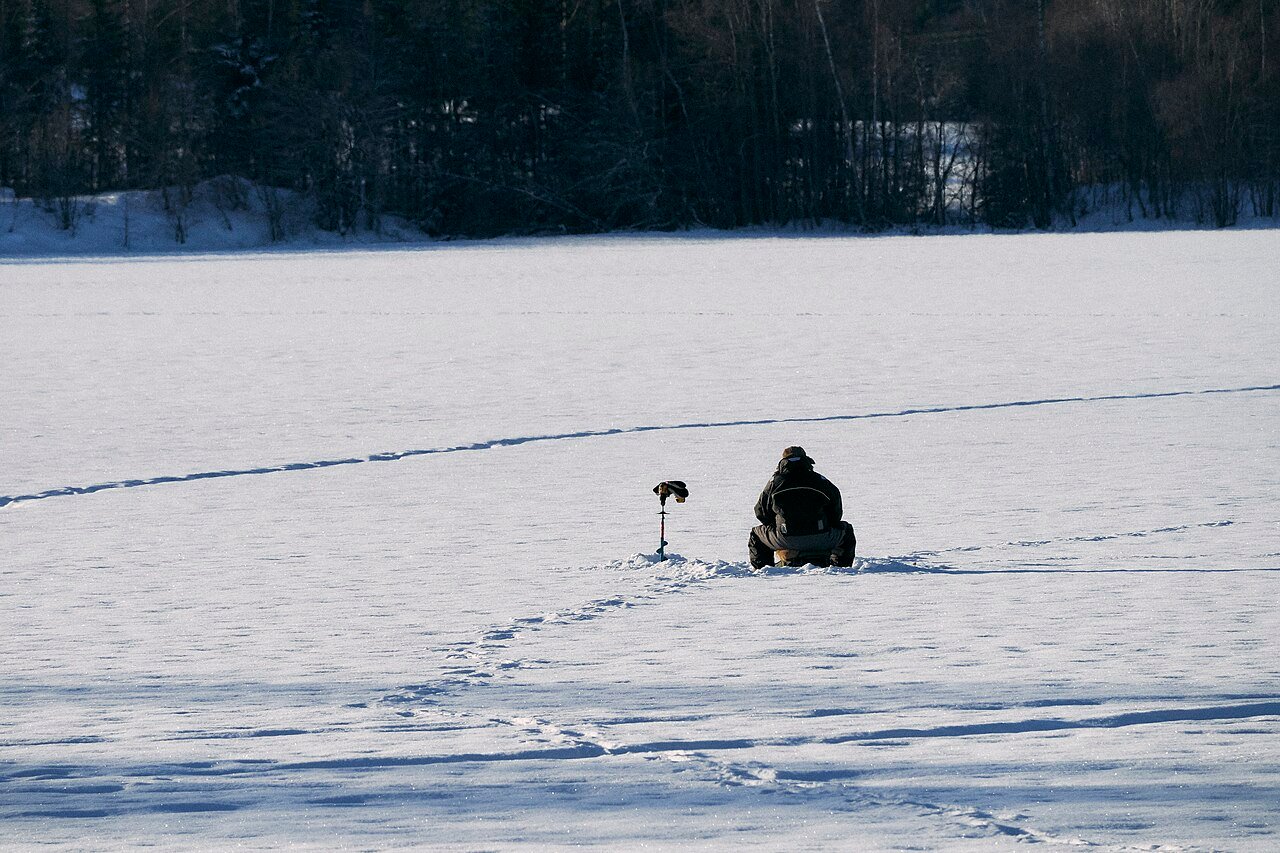
Ice fishing in Arctic Norway occupies a particular niche in the spectrum of winter activities: it is slower, quieter, and more patient than snowmobile safaris or dog sledding, but it produces a direct connection to the landscape and to traditional Arctic subsistence practices that the faster activities don't. You are sitting on a frozen lake in complete silence, watching a hole in the ice, waiting. When something pulls on the line, the smallness of the moment contrasts sharply with the vastness of the frozen landscape around you.
Where to Go Ice Fishing in Norway
The lakes and rivers of inland Finnmark and the Alta region are the best locations for guided ice fishing in Norway. The lakes freeze solidly from December through March — ice thickness of 80-120cm is common by midwinter, more than sufficient for safe walking, skiing, and even vehicle access.
- Alta area: Multiple operators offer ice fishing tours on lakes within 20-40km of the city. The plateau lakes are accessible by snowmobile or snowcat from the shore.
- Karasjok and Kautokeino: The interior plateau lakes are known for large Arctic char populations. Less tourist infrastructure but excellent fishing.
- Finnmark plateau generally: The plateau has hundreds of lakes and rivers with minimal fishing pressure due to the remoteness. A guided multi-day snowmobile expedition can include ice fishing at multiple locations.
What You Actually Catch
Arctic char (røye): The primary target for ice fishing in Norwegian mountain lakes. A coldwater salmonid that lives under the ice all winter, Arctic char is delicious — firm, flavourful flesh, similar to trout but with a more pronounced taste. Average catch weight: 200-600g per fish, with larger specimens reaching 1-2kg.
Kirkenes and the Finnmark plateau offer some of the most accessible frozen lakes in Norway — see our Kirkenes winter guide for how to combine ice fishing with other activities.
Brown trout (ørret): Also present in many Finnmark lakes. Similar size to Arctic char, slightly different flavour. Highly regarded as a food fish.
Perch and pike: Present in lower-altitude lakes. Less prized as food fish but adds variety to a session.
The Ice Fishing Process
A guided ice fishing tour typically follows this sequence:
Staying warm is half the battle — check our Norway winter packing list for what to bring on the ice.
- Travel to the lake: Snowmobile, snowcat, or cross-country ski depending on distance and operator. 15-60 minutes from the departure point.
- Drilling: Using a hand auger or motorised ice drill, holes are bored through the ice (typically 80-120cm deep in midwinter). The guide selects locations based on knowledge of underwater topography and fish behaviour.
- Fishing: Simple jigging technique — a weighted lure on a short, stiff rod, moved up and down in the water column. No casting. No fly fishing. The technique is learnable in 2 minutes and requires patience more than skill.
- Waiting: This is most of the experience. Ice fishing is not fast. Expect to wait 10-45 minutes between catches. The time is spent in silence (or conversation), watching the hole, and maintaining awareness of your body temperature.
- Cooking: Most guided sessions include cooking the catch over an open fire on the ice. Arctic char gutted and cooked in a pan with butter on a wood fire, eaten on a frozen lake at -15°C, is one of the more memorable food experiences available in Norway.
Cost and Booking
A standard guided ice fishing tour (3-4 hours, includes equipment, meal, transport to the lake) costs €80-150 per person. Prices in Alta are at the lower end; Tromsø-based operators typically charge slightly more.
Equipment is always provided — fishing licence, rod, lures, and all safety gear. A Norwegian freshwater fishing licence is required by law and is included in guided tour prices. For self-guided fishing, a licence costs approximately NOK 400 (€36) per year and is available online at inatur.no.
Staying Warm
Ice fishing involves extended stationary exposure. You are sitting or standing still on frozen ground with no wind protection for 2-3 hours. The layering system is identical to northern lights hunting: merino base layers, insulated mid layer, waterproof outer layer, -20°C boots, mittens, balaclava. Insulated overtrousers are worth the bulk. The operators provide seating (stools, reindeer skins to sit on) but not significant warmth.