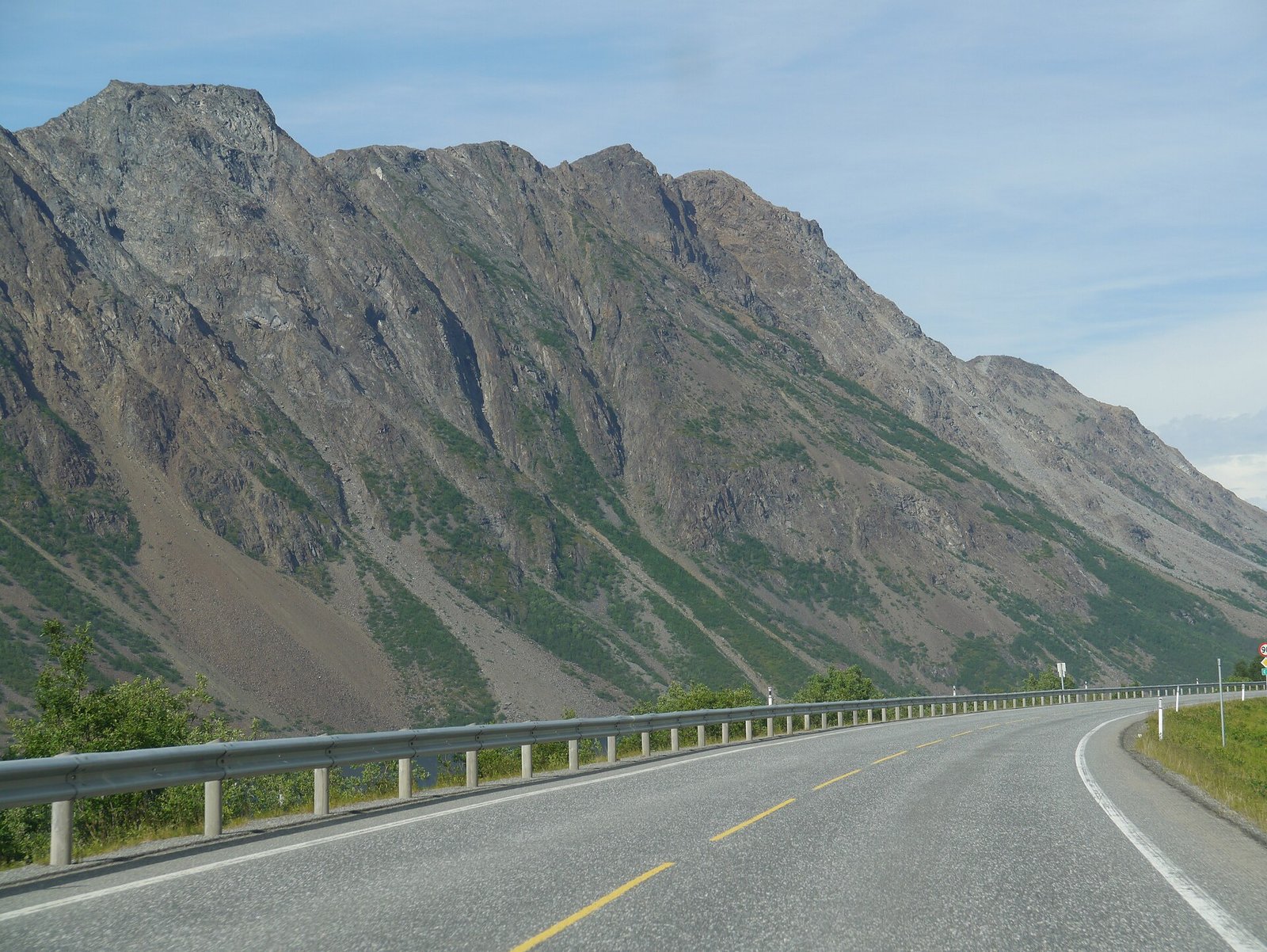
Driving in Norway in winter is manageable — Norwegians do it every day and so do hundreds of thousands of tourists annually. What requires adjustment is the complete absence of the conditions you are used to: the roads are covered in compacted snow or ice, the temperatures are well below zero, and the darkness in December-January means you are often driving in full night at what would normally be afternoon.
This guide covers what you actually need to know: tire rules, convoy systems, road condition apps, what to do if you get stuck, and how to drive safely in conditions that would cause chaos at lower latitudes.
Winter Tire Rules in Norway
Norway has mandatory winter tire requirements. Between 1 November and the first Sunday after Easter, all vehicles must be fitted with winter tires. The law does not specify studded vs non-studded, but studded tires (piggdekk) are by far the most effective on Norwegian winter roads — particularly in Finnmark, where compacted ice is the standard surface condition for months.
"All-season" tires (marked M+S or All Weather) meet the legal minimum in most of Norway but are meaningfully inferior to winter tires on ice. If you are renting a car for an Arctic Norway trip, specifically request studded winter tires and confirm this in writing. Many rental companies at Oslo Airport provide all-season tires as "winter tires" — this is legal but not what you want for driving in Finnmark or the E69 to the North Cape.
How to Drive on Compacted Snow and Ice
Speed
Reduce your speed significantly compared to dry road conditions. On compacted snow, stopping distances are 3-4x longer than on dry asphalt. The posted speed limit applies to summer conditions — experienced Norwegian drivers routinely drive 20-30km/h below the limit on winter roads.
Braking
Brake early and gently. Hard braking on ice triggers ABS (anti-lock braking system), which maintains steering control but significantly increases stopping distance compared to progressive braking. On a downhill section with ice, begin braking 3-4x earlier than you would on dry road.
Steering
Steer smoothly. Abrupt steering inputs on ice cause the front wheels to lose grip before the rear wheels, creating oversteer that is difficult to correct without experience. Turn the wheel progressively, not sharply.
Hills
Maintain momentum going uphill — stopping on an icy slope often means you cannot restart without wheel spin. If you must stop on a hill, use low gear to resume moving. Going downhill: use engine braking (low gear) rather than the service brakes alone, and maintain a low, steady speed rather than alternating between coasting and braking.
Road Condition Apps and Resources
- Vegvesen.no / Vegtrafikksentralen: The Norwegian Public Roads Administration's live road status service. Shows open, convoy, closed, and warning status for every major road. Essential for anyone driving the E69 to the North Cape or remote Finnmark roads. Available in English.
- Yr.no: Norwegian Meteorological Institute weather service. Hour-by-hour forecasts for any location in Norway. The standard tool used by Norwegians for weather planning. Available in English.
- Google Maps offline: Download offline maps for your route before leaving areas with reliable data. Mobile coverage in remote Finnmark is patchy.
What to Carry in Your Car
- Snow shovel: To dig out if you slide off the road or if your exhaust pipe gets buried during a convoy wait.
- Traction boards or sand: If you get stuck on ice with no traction, these go under the drive wheels.
- Jump leads: Cold temperatures kill batteries. If another car in a convoy fails, your leads can restart them and keep traffic moving.
- Blankets or sleeping bag: If you break down in a remote area and wait for assistance, you will be cold without this.
- Food and water for 24 hours: Road closures in Finnmark are not always brief. Being stranded for several hours is not uncommon.
- Torch (headlamp): For inspecting the car or signalling in the dark.
- Fully charged phone power bank.
Convoy Driving (Kolonnekjøring)
The convoy system is the mechanism that keeps high-risk mountain roads like the E69 to the North Cape operational in winter. When conditions are too severe for independent driving but not severe enough for a full road closure, the road authority implements a convoy: vehicles assemble at a designated point, a snowplough leads the group at reduced speed, and all vehicles maintain convoy discipline.
Key convoy rules:
- Do not overtake the plough or any vehicle ahead of you
- Maintain a minimum following distance of 100m (more on downhill sections)
- Do not stop unless the entire convoy stops
- Headlights on at all times
- Emergency flashers if you must slow significantly
Vehicles may be inspected before joining a convoy. Inadequate tires (all-season tires accepted, studded strongly preferred), missing emergency equipment, or mechanical issues may result in being turned away. The consequence: you wait for the next convoy, which may be several hours later.
Renting a Car for Winter Norway
For Arctic Norway specifically, these are the non-negotiable requirements when booking a rental car:
- Studded winter tires: Confirm in writing that your specific vehicle has studded tires (piggdekk), not just "winter tires." Many major rental companies at Oslo provide all-season tires that do not meet the practical requirements of Arctic driving.
- 4WD or AWD for Finnmark: Not legally required, but genuinely useful in deep snow. Most rental compact cars are front-wheel drive, which is adequate for main roads but struggles in unploughed areas.
- Book from northern Norwegian rental offices: Avis, Hertz, Europcar, and Sixt all operate at Tromsø and Alta airports, and their northern fleets are properly equipped. Do not rent from Oslo and drive north — the Oslo fleet is not prepared for Arctic conditions.