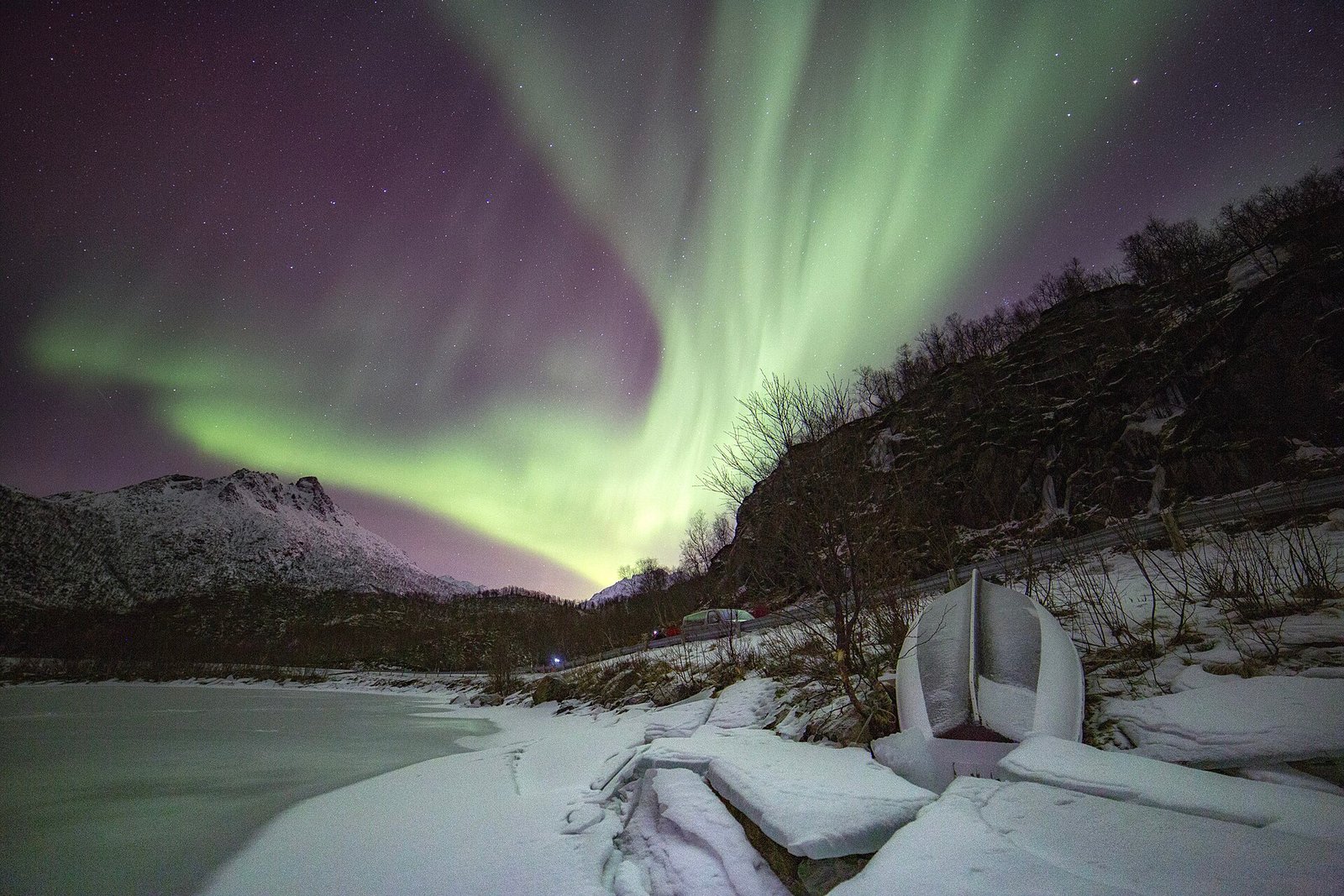
If you can only go to Arctic Norway once for the northern lights, go in February. This is not a controversial opinion among people who have made multiple trips — it is the consistent conclusion from combining geomagnetic activity data, cloud cover statistics, temperature, cost, and daylight hours into a single assessment.
Why February Is the Best Month for Aurora
The auroral equinox effect
Geomagnetic activity measurably increases around the spring and autumn equinoxes (approximately 20-21 March and 22-23 September). The mechanism involves the alignment of Earth's magnetic field with the interplanetary magnetic field around the equinoxes, which enhances coupling of solar wind energy into the magnetosphere. The effect peaks at the equinox itself but is statistically elevated for 2-4 weeks on either side — meaning February, March, September, and October are all elevated months for aurora activity.
February sits in the run-up to the spring equinox. Combined with the still-long Arctic nights (7-10 hours of complete darkness in Tromsø by mid-February), this makes February the statistical peak for productive aurora viewing.
Improving weather and clear skies
The worst of the Atlantic cloud systems that dominate December and January in coastal northern Norway begin to moderate in February. Alta and inland Finnmark — already better for clear skies than Tromsø — become even more reliable from February onwards. Weather patterns stabilise and the frequency of clear nights increases compared to December-January.
Returning daylight
By mid-February in Tromsø, there are 4-6 hours of daylight, rising fast. This gives you enough light for daytime outdoor activities — dog sledding, snowmobile, snowshoeing — and still leaves 8-10 hours of complete darkness for aurora hunting each night. The combination of real daylight and long dark nights is the ideal structure for a northern lights trip.
Lower prices than January
The post-Christmas, post-New Year period sees accommodation and tour prices drop from their January peaks. February is still "high season" but the Christmas premium is gone. A week in February typically costs 15-25% less than the same week in late December or early January.
What February Is Like in Practice
A mid-February day in Tromsø: sunrise around 09:00, sunset around 14:30 — 5.5 hours of daylight, increasing by about 8 minutes per day. By the end of February: sunrise 08:00, sunset 16:00. Temperatures: -5°C to -12°C on average, with colder periods to -20°C possible but less common than January.
The landscape in February is fully winter — deep snow cover, frozen fjord edges, snowmobile-accessible plateau terrain. All winter activities are operational: dog sledding, snowmobile safaris, reindeer experiences, snowshoeing, and aurora tours. The infrastructure is at peak operational capability.
February Half-Term: Book Early
February half-term (school holidays in UK, Germany, Netherlands, and Scandinavia — typically the third week of February) is the single most booked week of the Arctic Norway winter season. Hotels sell out 2-3 months ahead, the best aurora tour operators have waiting lists, and prices spike compared to surrounding weeks.
If you can travel in the first or last week of February rather than mid-month, you get comparable conditions with significantly less competition for accommodation and tours. The weather and aurora statistics do not meaningfully differ between the first and third weeks of February.
February vs March
March is close to February in almost every metric — similar aurora statistics (equinox effect), more daylight (up to 10-12 hours by late March), and even lower prices. The differences:
- March has more daylight, making it better for people who want outdoor activities alongside the aurora.
- February has more complete darkness per night — 8-10 hours vs 5-7 hours in late March. If you want the maximum aurora hunting window each night, February has the edge.
- Whale watching: no longer possible in March. If whales are a priority, February is the last reliable month to combine them with aurora hunting (though January is safer for whale watching specifically).
Both months are excellent. February for maximum darkness and aurora window; March for more daylight and lower prices.