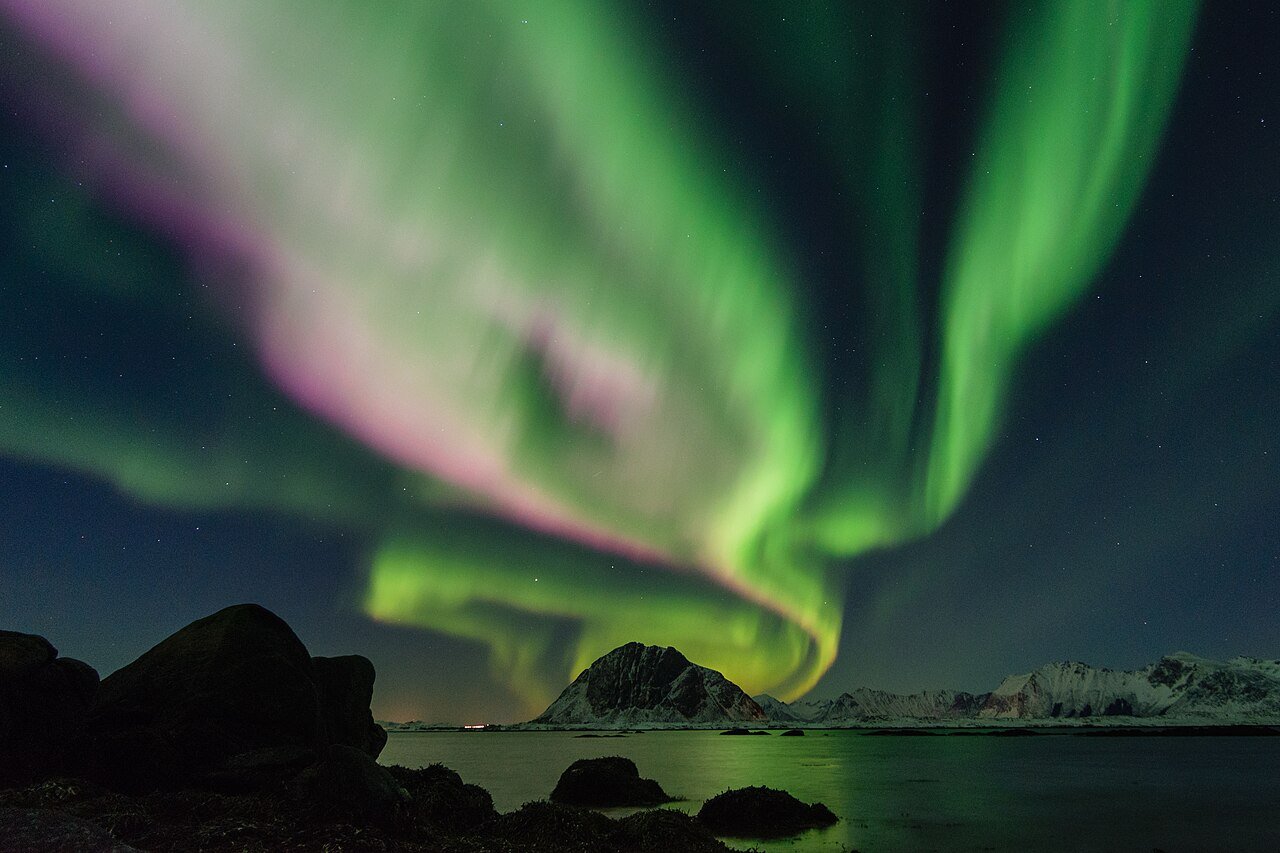
The Lofoten Islands in winter are something extraordinary. The dramatic mountains plunge directly into the sea, traditional red fishermen's cabins (rorbuer) line the harbours, and the northern lights arc overhead in spectacular displays. Winter removes the summer crowds and reveals Lofoten at its most raw and beautiful.
Why Lofoten in Winter Is Special
Lofoten has become Norway's most photographed destination, and summer brings overwhelming crowds. Winter — roughly November through March — is different. The population of tourists drops dramatically, the rorbu cabins are available at reasonable prices, and the light is extraordinary. During polar night the mountains glow in shades of blue and pink even at midday.
The islands also sit at a surprisingly mild latitude for their position. The Gulf Stream keeps temperatures around -2°C to -5°C even in January — cold, but nothing like inland Finnmark where -25°C is normal. Snow is more reliable in Lofoten than in coastal cities further south.
Winter daylight is severely limited. In December and early January, you'll get roughly 3-4 hours of twilight, peaking in late afternoon. This actually works in your favour: long dark hours mean better conditions for aurora hunting, and the extended darkness creates a moody, contemplative atmosphere that summer visitors never experience.
Northern Lights in Lofoten
Lofoten is one of the best places in Norway to photograph the northern lights, and for good reason. The combination of dramatic mountain backdrops, reflective fjords, and the iconic rorbuer creates compositions that northern lights photography in flatter landscapes simply can't match.
The best villages for aurora photography are Reine, Hamnøy, Sakrisøy, and Henningsvær. Clear skies are the limiting factor — Lofoten gets significant precipitation. Monitor weather forecasts carefully and be prepared to move between islands if cloud cover rolls in.
Aurora activity in Lofoten peaks between September-March, with the strongest displays typically occurring between 11pm and 2am. The Kp index (the measure of geomagnetic activity) needs to reach at least Kp3 for reliable naked-eye displays, though aurora is often visible at lower levels in dark locations. Several local operators offer guided aurora tours that include transportation to optimal viewing spots and real-time weather monitoring — expect to pay 400-600 NOK per person for a 2-3 hour excursion.
Getting to Lofoten in Winter
Fly into Svolvær (SVJ) airport with connections from Bodø. Alternatively, fly to Evenes (Harstad/Narvik airport) and drive the E10 across the bridges that connect the islands — this 3-hour drive from Evenes is one of the most scenic in Norway. The Hurtigruten ferry also stops at several Lofoten ports.
Within Lofoten, a rental car is essential in winter. Public transport is limited and many attractions are spread across the islands. Roads are kept clear but require winter tyres and careful driving — ice and black ice are common, especially on bridges. Most car rental companies charge an additional 80-150 NOK per day for winter tyre packages. Expect fuel costs around 1.70-1.90 NOK per litre. The E10 highway runs 142 km from Svolvær to Å village at the southern tip.
Where to Stay: Rorbu Cabins
The traditional choice is a rorbu (fishing cabin) — originally built to house fishermen during the cod season, now converted into tourist accommodation. In winter you get the authentic Arctic atmosphere without the summer premium. Sakrisøy Rorbuer, Eliassen Rorbuer at Hamnøy, and Nusfjord Arctic Resort are all excellent options.
Winter rorbu prices typically range from 1,200-2,500 NOK per night for a 2-person cabin with basic heating and bathrooms. Most include kitchen facilities. Peak season (December 20-January 5 and February half-term) sees prices at the higher end; shoulder season (November, March) can drop to 800-1,200 NOK. Book at least 4-6 weeks ahead for the most desirable locations like Reine and Hamnøy.
Alternative accommodation includes guesthouses in Svolvær, Kabelvåg, and Henningsvær, which offer 3-star amenities at similar prices to rorbuer. For budget travellers, Svolvær has a hostel (Svolvær Hostel) with beds from 350-450 NOK.
Top Winter Activities
- Northern lights photography from Hamnøy or Reine — book a guided tour or explore independently with a tripod and DSLR camera
- Hiking the Reinebringen viewpoint (449m elevation gain, 1-2 hours) — challenging in winter, crampons or microspikes essential
- Sea eagle safari by boat — winter is peak white-tailed eagle season; tours run 3-4 hours, approximately 700 NOK per person
- Cod fishing from a rorbu — the winter cod season (skrei) runs January to April; hand-line fishing is possible from many cabins, or join organized fishing trips
- Snowshoe hikes through the mountains — gentler alternative to crampons-required trails
- Viking museum at Borg (Lofotr Vikingmuseum) — replica Viking house with artifacts; entry 170 NOK, 45-minute drive from Reine
- Driving the E10 scenic route end-to-end — allow a full day with photo stops
Best Time to Visit
Late November through early March is the official winter season. Mid-November to mid-December offers slightly more daylight (useful for non-aurora activities) and fewer crowds than peak season. December 20-January 5 is peak tourist season — prices are highest and villages busier, but aurora activity is typically strong. Late January through February offers the best compromise: reliable snow cover, good aurora probability, and lower prices than Christmas period. March sees temperatures rising slightly and daylight increasing (useful if you plan non-evening activities), but precipitation increases.
What to Know Before You Go
- Winter gear is mandatory: Insulated, waterproof jacket (not just windproof), thermal layers, insulated boots rated to -20°C, thick socks, gloves, hat, and neck warmer. Standing outside for 2-3 hours watching for aurora means exposed skin freezes quickly.
- Roads can close unexpectedly: While the E10 is priority for snow clearance, secondary roads and small bridges can become impassable. Check yr.no and Vegvesenet (Norwegian Road Authority) forecasts before driving.
- Accommodation books quickly: The best rorbu cabins in Reine and Hamnøy are reserved 2-3 months in advance for December and February half-term.
- Restaurant options are limited: Many tourist restaurants close in November and reopen in March. Cooking in your rorbu is often the better option. Stock supplies in Svolvær or Kabelvåg.
- ATMs and shops are centralized: Svolvær has banks and supermarkets; smaller villages have only small shops with limited stock and higher prices.
- Weather is unpredictable: Clear skies can turn to heavy snow in hours. Keep flexibility in your plans and be prepared to move locations for aurora hunting.
Practical Budget Breakdown
For a week-long winter trip to Lofoten, expect these costs per person (based on two people travelling together):
| Expense | Cost (NOK) |
|---|---|
| Rorbu cabin (7 nights, mid-range) | 10,500 |
| Car rental (7 days with winter tyres) | 3,500 |
| Fuel (700 km driving) | 1,200 |
| Groceries (cooking in cabin) | 1,500 |
| Guided aurora tour (2 tours) | 1,000 |
| Sea eagle safari | 700 |
| Restaurant meals (3-4 dinners) | 1,800 |
| Museum/activities entry fees | 350 |
| Total (per person) | 20,550 NOK |
This equals roughly €2,200-2,400 or US$2,300-2,500 at current exchange rates. Budget increases significantly during peak Christmas/New Year (add 30-50% to accommodation) and decreases in shoulder season (November, early March).
Frequently Asked Questions
Is it too cold to be outside in winter in Lofoten?
At -2°C to -5°C, Lofoten winters are cold but manageable with proper gear. The bigger challenge is wind chill over extended periods (like aurora watching) and the psychological difficulty of darkness. Many people find the cold easier to handle than coastal winds. Polar nights actually feel warmer than sunny -15°C days because the wind is often less brutal.
Will I definitely see the northern lights?
No. Aurora depends on three factors: solar activity (the Kp index), clear skies, and darkness. Lofoten's location is excellent, but cloud cover is the limiting factor — the islands see significant winter precipitation. A typical week in Lofoten yields 1-2 clear nights suitable for aurora, though strong displays might occur on cloudy nights if you know the right locations. Book tours with flexible rescheduling options, or plan activities that don't depend on clear skies (hiking, museums, fishing).
Can I drive to Lofoten without winter driving experience?
Yes, but carefully. The E10 is regularly maintained and salted. The real risk is overconfidence — ice forms invisibly on bridges and in shaded areas. Rent a car with electronic stability control, fit winter tyres, drive slowly in poor visibility, and avoid driving at night if unfamiliar with icy roads. Alternatively, book guided tours or hire a driver (local taxi services charge 600-800 NOK/hour). Many visitors without snow driving experience choose not to self-drive and instead book accommodation with good bus/tour access or use the Hurtigruten ferry.
What's the cheapest time to visit Lofoten in winter?
November (late autumn rather than winter) and March (early spring) offer the lowest prices — rorbu cabins drop to 800-1,200 NOK per night. November has longer daylight (5-6 hours) and slightly warmer temperatures (around 0°C), making non-evening activities easier. March similarly offers more daylight but increased precipitation. January-February is peak season with higher prices but strongest aurora probability and reliable snow cover. Choose based on whether you prioritize budget or aurora chances.