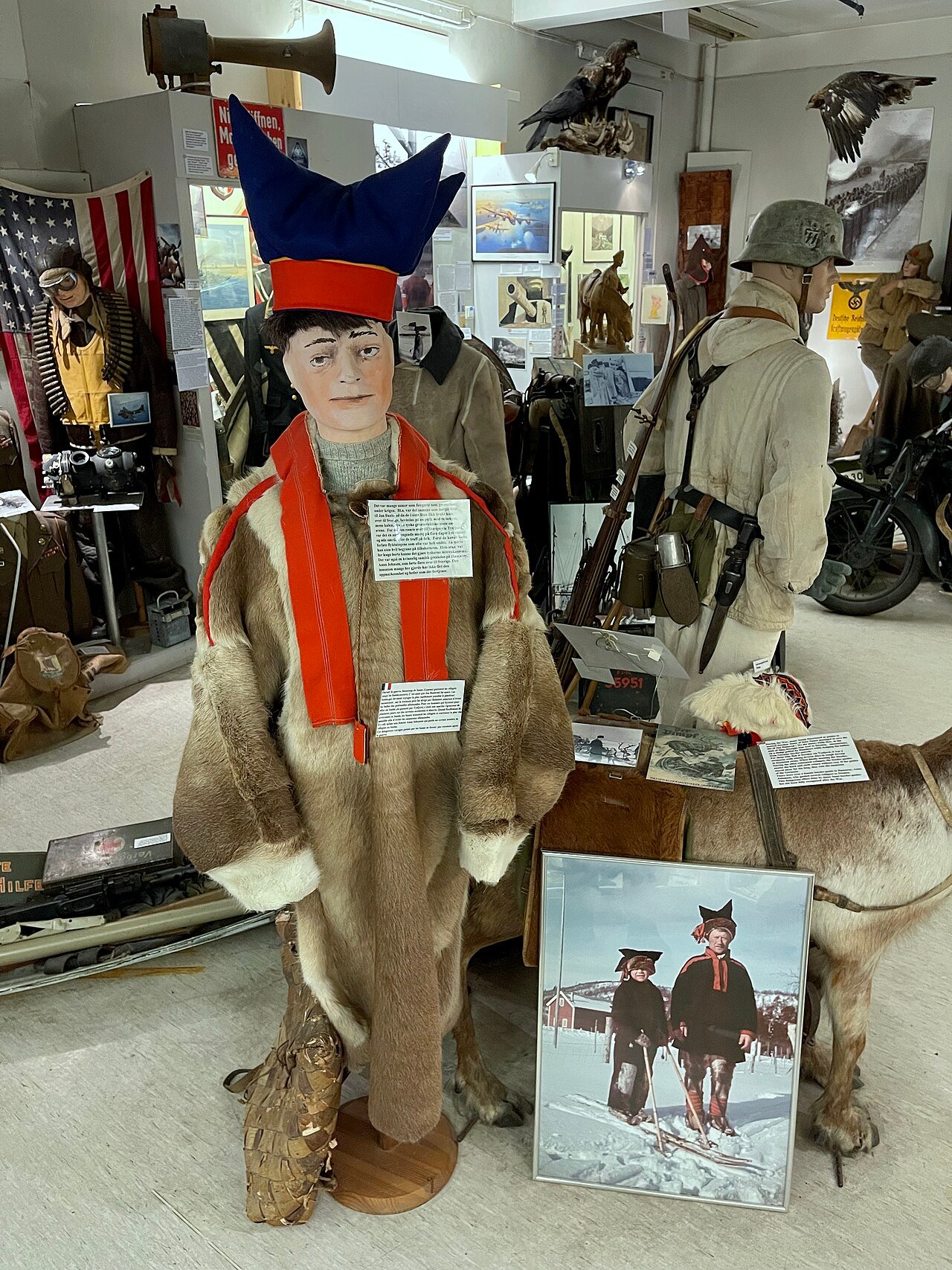
Reindeer sledding is not the same experience as dog sledding. Dogs are fast and enthusiastic; reindeer are slower, quieter, and somewhat inscrutable. The experience is softer, more closely tied to Sami culture and tradition, and produces a different relationship with the landscape — less adventure sport, more meditative.
What Is Reindeer Sledding?
Traditional Sami reindeer sledding uses a single reindeer to pull a narrow, low sled (ahkio) across snow. In Sami culture, this was the primary method of transport across the Finnmark plateau for centuries — reindeer were used to haul goods, carry sick or injured people, and travel between seasonal herding grounds.
Modern tourist experiences are typically offered by Sami reindeer herding families who combine a short sledding session with information about their way of life, the herding tradition, and the Sami relationship with reindeer as domestic working animals. The experience lasts 1-3 hours and usually includes a traditional meal (often bidos, a reindeer stew) and joik — traditional Sami vocal music.
The reindeer you'll ride are working animals, not pets. They respond to voice commands and gentle rein guidance. Unlike the intense focus required for dog sledding, reindeer sledding is fundamentally about surrendering control and trusting the animal's instincts. The reindeer knows the terrain, knows how fast it should travel, and will navigate around hazards. Your role is to sit, balance, and observe.
Where to Do Reindeer Sledding in Norway
- Tromsø area: Several Sami families operate experiences 30-60km from Tromsø, accessible by operator transport or self-drive. The setting is birch forest and fjord terrain. Common operators include Sommarøy Arctic Lodge (60km south) and family-run herds near Målselv. Travel time is 1-1.5 hours from Tromsø city centre.
- Alta: Multiple operators, closer to the cultural heartland of Norwegian Sami culture. The terrain is plateau and open tundra. Alta is 500km east of Tromsø. Several herding families operate near Alta town and in the surrounding Finnmark plateau region.
- Kautokeino: The centre of Norwegian Sami culture and language. Reindeer herding families here offer some of the most culturally authentic experiences, though logistics require a separate trip from Tromsø or Alta. Distance from Tromsø: 380km (5-6 hours drive). Distance from Alta: 145km (2 hours drive).
- Karasjok: Near the Sápmi Park cultural centre. Combined museum visit and reindeer experience available. 385km from Tromsø (5.5 hours), 55km from Kautokeino.
Cost and Booking
A standard reindeer sledding experience (2-3 hours, includes meal and cultural presentation) costs €80-150 per person (roughly 900-1600 NOK). Premium experiences with a longer cultural component, more time with the herd, or a multi-hour plateau ride cost €150-250 (1600-2700 NOK).
Book directly with the operator or through the regional tourism websites (Visitnorthernorway.no, Visit Alta, Visit Kautokeino). In peak season (December-February), book at least 2-3 weeks in advance. Many families run small-group experiences (6-10 people maximum) that fill quickly. Children are typically welcome from age 4 onwards, though some operators have age or height restrictions due to sled design.
Most operators include transport from your hotel or a central meeting point. If you're self-driving, confirm parking and arrival times when booking. Some experiences require arriving by 10-11am, as traditional meals and activities are timed for midday.
What to Expect: A Typical Reindeer Sledding Session
You'll arrive at a family herd site (often a traditional lavvu tent or cabin) where the reindeer are kept. The herder will explain the herd, show you the animals up close, and discuss how reindeer are managed throughout the year. You'll then be fitted with warm clothing if needed, helped into the sled, and given basic instructions on how to sit and hold the reins.
The actual sledding portion typically lasts 30-45 minutes. You'll move across snow at a steady walk to moderate trot — speed varies depending on snow conditions, terrain, and the individual reindeer's temperament. The route is usually a loop returning to the starting point, covering 5-8km of distance.
After sledding, you'll return for a hot meal. Bidos (reindeer stew) is standard, served with bread, lingonberry jam, and coffee. Many operators include a joik performance — a traditional Sami chant that can be eerie and moving. Some experiences include a photo session with the herd or time to interact with the animals.
Reindeer Sledding vs Dog Sledding
| Aspect | Reindeer Sledding | Dog Sledding |
|---|---|---|
| Speed | 8-15 km/h (walking to steady trot) | 15-25 km/h or faster |
| Cultural tie | Central to Sami identity and history; still used by herders | Modern sport tourism; not a traditional Sami practice |
| Physical involvement | Passive; you sit in the sled | Active; you manage braking, weight, and team |
| Distance covered | 5-10 km per session | 10-30 km per session |
| Duration | 2-3 hours total (including meal) | 2-5 hours (sledding only) |
| Best for | Cultural immersion; quiet, meditative experience; families with young children | Adrenaline; physical challenge; covering distance |
| Typical cost | €80-150 | €80-180 |
Both are excellent and complementary. If you have time for one: choose dog sledding for the physical experience and covering distance; reindeer sledding for the cultural experience and a slower pace. Many visitors who spend 5+ days in the region do both.
What to Know Before You Go
- Weather and snow conditions: Reindeer sledding requires good snow coverage. Late November to March is peak season. In marginal snow years (rare but possible), some tours may be cancelled or rescheduled. Confirm the day before your booking.
- Clothing: You'll spend 30-45 minutes in a sled in sub-zero temperatures. Wear or bring: insulated jacket, windproof trousers, thermal underlayers, wool socks, gloves, and a warm hat. Operators often provide additional blankets or reindeer hides.
- Physical fitness: You need minimal fitness for reindeer sledding. The activity is accessible to people aged 4-80+. The only limitation is ability to climb into a low sled — anyone with severe mobility issues should confirm suitability with the operator beforehand.
- Allergies: If you have reindeer meat allergies, notify the operator when booking, as bidos may not be suitable. Alternatives are usually available.
- Photography: Reindeer sledding is photographically rewarding. Bring a camera rated for cold (smartphone batteries drain faster). The herders are usually happy to help with photos, and many include a group photo in the experience.
- Language: English is standard at tourist-focused operators, especially near Tromsø. In more remote Kautokeino family operations, basic English is typical, but guides may speak Sami as a first language.
Best Time to Visit for Reindeer Sledding
December-February is peak season. Snow is reliable, daylight is minimal (excellent for Northern Lights viewing), and reindeer are at their strongest. Temperatures are typically -10 to -20°C. This is the busiest period — book 3-4 weeks ahead.
November and March can work, but snow coverage is less predictable. November is warmer (-5 to -10°C) but may have patchy snow. March is milder and days are longer, but herds are often in transit to spring pastures, making some experiences unavailable.
April-October: No sledding. Snow melts, reindeer are relocated to summer pastures, and the experience doesn't operate. Some families offer summer activities like traditional herding walks or visits to the herd, but not sledding.
Frequently Asked Questions
Is it cruel to use reindeer for sledding?
This is a legitimate question. In Sami culture, reindeer herding and sledding have been part of the economy and way of life for over 1,000 years. The reindeer you'll ride are working animals, bred and trained for this purpose. The experience is part of the herder's livelihood and cultural preservation. Tourist sledding generates income that helps families continue traditional herding practices that would otherwise be economically unviable.
That said: choose operators who are Sami herders themselves or who work directly with Sami families. Avoid operations that feel industrial or that prioritize volume over animal welfare. A well-run reindeer sledding experience with a family herd is significantly different from a commercial dog sledding operation where animals are bred primarily for tourism.
Can I do reindeer sledding if I'm not comfortable with animals?
Yes. The reindeer does the work; you're a passenger. You don't need to guide or control the animal — it follows its route, and you sit in the sled. That said, you'll be close to the reindeer and may touch it during the experience. If you're extremely uncomfortable around animals, reindeer sledding might not be your best choice. Dog sledding, by contrast, requires more direct interaction and control.
Can I see the Northern Lights during reindeer sledding?
Possibly, but not during the sledding activity itself. Most reindeer experiences run during daylight (10am-1pm) or twilight hours (3pm-5pm) when guides prefer to operate for safety. The Northern Lights are typically visible after 8pm or 9pm. You could combine a reindeer sledding experience (daytime) with a separate Northern Lights chase tour the same evening, which many operators offer.
What's included in the cost, and are there hidden charges?
Standard inclusions: transport from meeting point, warm clothing if needed, the sledding activity (usually 30-45 minutes), a hot meal, and a guide's explanation of Sami culture and herding. Exclusions: hotel pick-up fees (though most include this), alcoholic drinks beyond complimentary coffee, and photographs (some operators charge for printed photos, though digital sharing is usually free).
Ask when booking: Is hotel transport included? Are children charged full price or half price? What happens if snow conditions are poor? Can I cancel if the aurora isn't visible? Most reputable operators are transparent about these details.