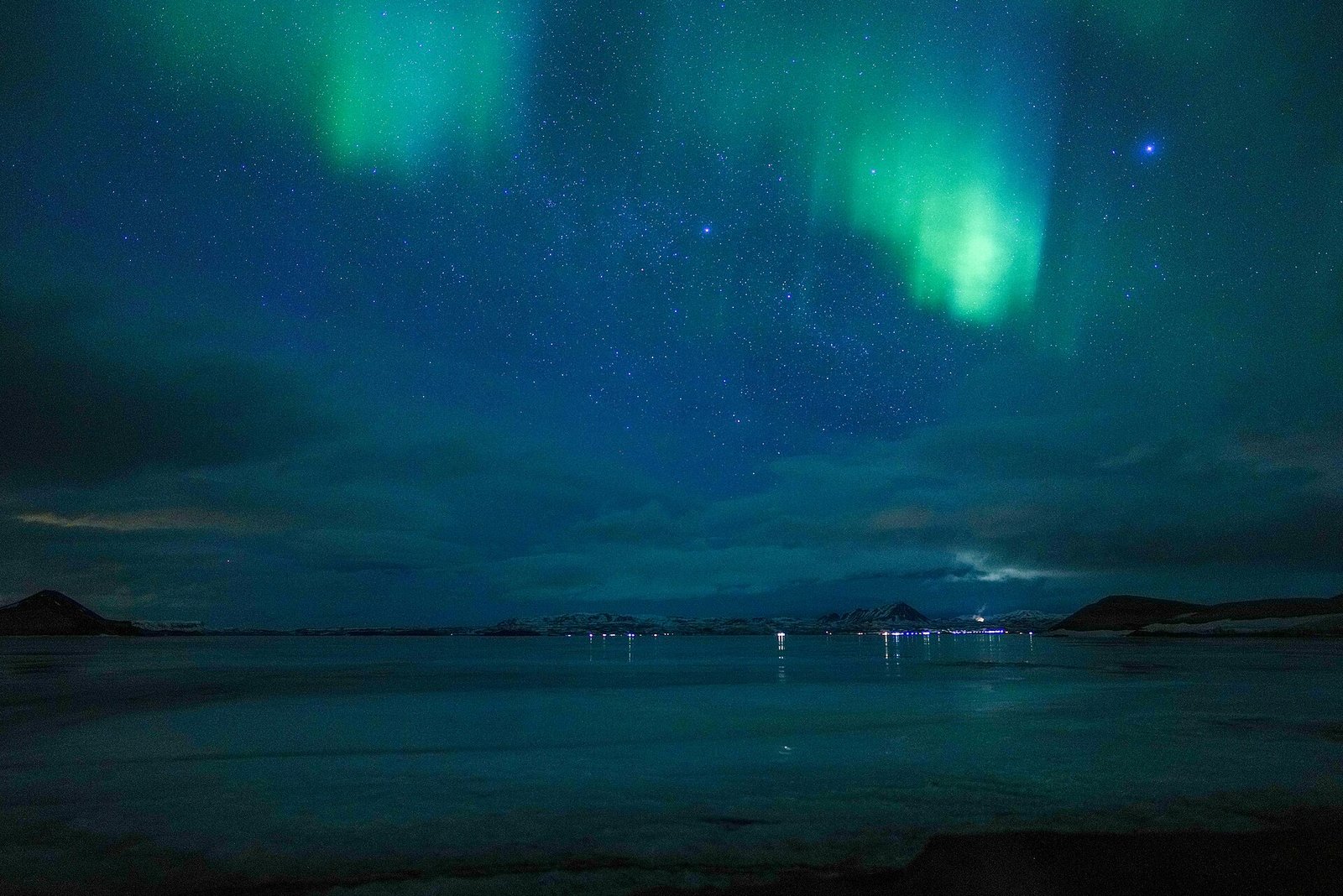
Both Norway and Iceland market themselves as northern lights destinations. Both can deliver spectacular aurora displays. But they're very different trips. Here's an honest comparison based on what you'll actually experience on the ground.
If Finland is on your shortlist instead, we break down the differences in our Norway vs Finland for northern lights.
Aurora Viewing Conditions
Norway: Northern Norway (Tromsø, Alta, Kirkenes) sits directly under the auroral oval — the ring around the magnetic North Pole where aurora activity concentrates. The best season is September to March, with October-February being peak. Tromsø at 69°N experiences 24-hour darkness from November to January, which means longer viewing windows each night. During the peak season, you might see aurora activity 4-5 nights per week if skies are clear. The advantage: if clouds roll in where you're based, you can move location. Northern Norway is spread across 350km of coastline, so operators and tour guides routinely relocate groups to chase clear skies.
Iceland: Reykjavik and southern Iceland are at 64°N, further from the auroral oval. You need to drive away from light pollution (typically 30-60km outside the capital), get lucky with solar activity, AND have clear skies. Iceland's weather is famously unpredictable — cloud cover persists 6-7 days per week on average during winter. You're also limited by geography: Iceland is smaller, so if it's cloudy in the south, you can't just hop to another region easily. The season (September-March) is the same, but statistical probability of seeing aurora is lower.
Verdict: Norway has the measurable edge for northern lights probability. If aurora is your primary goal and you want the best odds, Tromsø or Alta deliver higher success rates. Tour operators in these towns report roughly 65-70% success rates over a full week in peak season. Iceland's success rate is closer to 40-50% for the same timeframe.
Costs: Norway vs Iceland Breakdown
A realistic cost comparison for one person, per week:
| Cost Category | Tromsø, Norway | Reykjavik, Iceland |
|---|---|---|
| Mid-range accommodation (per night) | NOK 800-1,200 (€85-130) | €100-150 |
| Aurora tour (per person, full evening) | NOK 500-700 (€53-75) | €70-120 |
| Husky/reindeer sledding (3 hours) | NOK 600-900 (€65-95) | Not available |
| Meals (average dinner) | NOK 180-300 (€20-32) | €25-40 |
| Car rental (per day, winter rates) | NOK 500-800 (€53-85) | €55-85 |
| 7-night total estimate | €1,500-2,200 | €1,800-2,800 |
A crucial factor: flights. From the UK, flights to Reykjavik start around £80-120 return. Flights to Tromsø typically cost £120-200 return. From North America, Iceland flights are significantly cheaper (often $300-400 cheaper per person). From mainland Europe, the gap narrows. If cheap flights are your priority, Iceland usually wins.
Activities Beyond the Aurora
Norway's Arctic Activities
Northern Norway offers activities deeply tied to Arctic culture and environment:
- Husky sledding: Operators like Tromsø Dog Sledding and Sled Dog Adventures offer 3-4 hour trips (NOK 700-900) where you actually drive the team yourself. This isn't available in Iceland.
- Reindeer sledding with Sami families: Immersive experiences in traditional Sami culture, often including lavvu (tent) visits and traditional meals. Operators in Alta (like Sami Experience) charge NOK 600-1,200 for half-day experiences.
- Whale watching: November-January, orca and humpback whales hunt herring near Tromsø. Several operators (Whale Safari, Tromsø Whale Watching) run 3-hour boat trips (NOK 800-1,000). This is genuinely unique to Northern Norway.
- Ice fishing: On frozen lakes near Tromsø and Alta, operators provide equipment and guide you through the experience.
- Snowmobile safaris: Multi-hour backcountry trips into Arctic wilderness (NOK 1,200-1,800 for a full day).
- Cross-country skiing: Accessible directly from most towns; rentals run NOK 150-250 per day.
Iceland's Landscape Activities
Iceland packs geological and scenic diversity into a smaller area:
- Golden Circle: Geysir geothermal area, Þingvellir National Park (UNESCO World Heritage, 1 hour from Reykjavik), Gullfoss waterfall. Easy self-drive or guided tours (€80-120).
- Glacier hiking: Sólheimajökull and Vatnajökull glaciers offer 3-5 hour guided hikes (€120-200).
- Ice caves: Natural caves within glaciers, requiring specialized tours (€150-250).
- Whale watching: Year-round from Reykjavik and other towns, though not as reliable in winter as Norway's orca season.
- Blue Lagoon: Geothermal hot spring near Keflavik airport (€45-75 entry, 45 minutes from Reykjavik). Iconic but crowded and touristy.
- Volcanic landscapes: Craters, lava fields, and geological formations accessible via hiking or vehicle tours.
Key difference: Iceland's activities are landscape-focused and don't require extreme cold tolerance. Norway's activities are cultural and wildlife-focused, requiring proper winter gear and willingness to be outside in -15°C temperatures.
Weather and Practical Conditions
Norway (Tromsø/Alta): Expect -10°C to -20°C regularly. December-January sees 24-hour darkness in Tromsø. Roads are well-maintained; Norwegians are experienced with winter driving. Wind chill is a real factor; you'll spend time outdoors standing still watching for aurora, so proper insulated gear is non-negotiable (thermal base layers, -30°C rated parka, insulated boots).
Iceland: Winters are milder (around -2°C to +5°C), but windier and wetter. Roads are maintained but ice is common; rental car agreements often exclude damage from snow/ice driving. You'll spend time driving to remote locations and standing outdoors, but temperature tolerance is less extreme than Norway.
What to Know Before You Go
- Aurora is never guaranteed: Even in peak season with perfect conditions, aurora might not appear if solar activity is low. Both countries offer rebooking policies (typically 1-3 free rebooked tours if aurora isn't visible).
- Book 2-3 months ahead: December is high season in both locations. Accommodation and tours fill quickly. September and March offer lower prices and shorter waits, though slightly fewer daylight hours (fewer alternate activities).
- Norwegian visa requirements: UK, US, Canadian, Australian, and NZ citizens get 90 days visa-free in the Schengen area (which includes Norway). Iceland is also in the Schengen area. No difference here.
- Driving in winter: Norway's roads are better maintained, but both countries are safe to drive in winter if you're careful. Norway requires winter tires (legally mandatory October 1-April 30). Iceland recommends them.
- Physical fitness: Husky sledding in Norway requires reasonable fitness. Glacier hiking in Iceland requires better fitness and hiking experience. Aurora tours in both locations involve standing outside for 4-5 hours.
Which Should You Choose?
Choose Norway if: Aurora is your primary goal and you want the best odds. You're interested in Arctic culture (Sami experiences), wildlife (whale watching), or activities like husky sledding. You have time to stay 5+ nights and want to maximize aurora viewing windows. You don't mind extreme cold.
Choose Iceland if: You want diverse landscapes and multiple activities in a compact area. You have cheap flights available. You prefer milder temperatures and less extreme conditions. Your trip is shorter (3-4 nights) and you want backup activities beyond aurora viewing. You're combining this trip with mainland Europe.
The honest answer: If aurora is your priority, Norway wins. If you want a well-rounded winter experience with landscape variety, Iceland wins. Logistically and budget-wise, it often depends on your flight options from your home country.
Frequently Asked Questions
What's the best month to see northern lights in each location?
January-February in Norway and January in Iceland. Both have the longest darkness and statistically good solar activity patterns. December is slightly warmer but increasingly touristy. October and March are less crowded but have shorter viewing windows (some twilight hours at noon) and lower aurora frequency.
Can I see northern lights without a tour?
Yes, but it's harder. In Norway, you can rent a car and drive to remote locations yourself. In Iceland, you'll need to drive 30-60km from Reykjavik, find a dark spot, and hope for clear skies. Guided tours include location expertise (guides know where to drive for clear skies that night) and photography advice. They're worth the cost if aurora is your goal.
How many nights should I stay to see northern lights?
Minimum 4-5 nights in either location. This accounts for cloudy nights and low solar activity. Most tour operators offer rebooking guarantees: if you don't see aurora in your first 3 booked tours, you get additional tours free. Seven nights dramatically increases your odds in both places.
Is northern lights photography difficult?
You need a camera with manual mode (phone cameras won't work), a tripod, and basic settings knowledge (ISO 1600-3200, shutter speed 15-25 seconds, wide aperture). Most guided tours include photography tips. Guides in Norway are more experienced with aurora photography because they see it more frequently. If photography isn't important to you, just watch — it's more rewarding than staring at a screen.