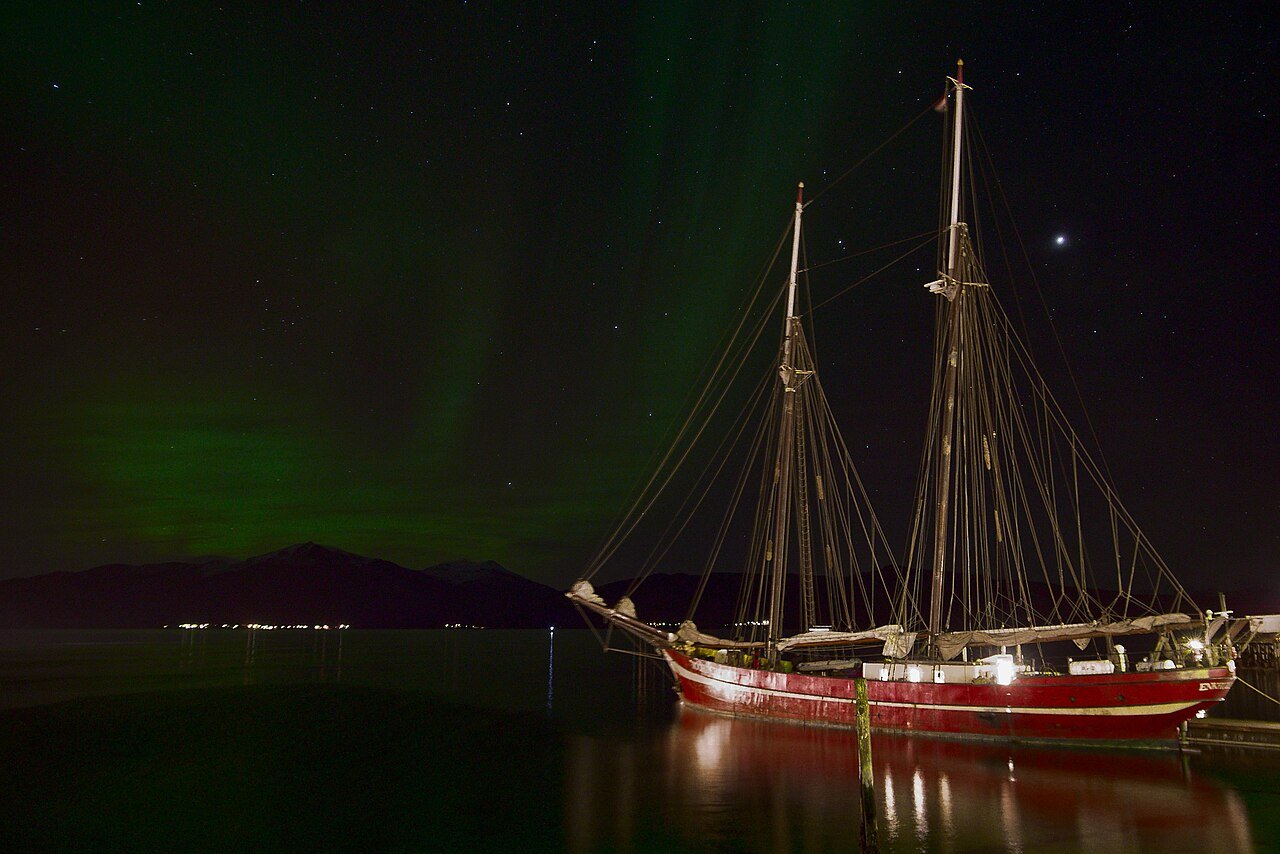
A northern lights cruise combines two things: the dramatic scenery of the Norwegian fjords and coast, and the chance to see the aurora borealis from the water. The view of northern lights reflecting off an Arctic fjord is genuinely one of the most spectacular natural spectacles available to travellers.
Types of Northern Lights Cruises in Norway
Hurtigruten coastal voyage: The classic option. The Hurtigruten ferry runs year-round between Bergen and Kirkenes, calling at 34 ports along the Norwegian coast. The winter voyage (November to March) is specifically marketed for northern lights viewing. The ships are large — 500+ passengers — and comfortable. Journey time for the full route is 12 days each way.
Hurtigruten Expeditions (HX): Hurtigruten's expedition arm runs dedicated Arctic expedition cruises with a stronger focus on activities and wildlife. These are smaller ships with Zodiac landings and lectures from expedition team members.
Small expedition ships: Several operators run 50-200 passenger expedition ships in Arctic Norway, particularly around Svalbard and northern Finnmark. These offer more remote access and a closer connection to the environment.
Small-boat aurora tours: From Tromsø and Alta, local operators offer 3-4 hour boat tours specifically for northern lights viewing. The advantage: a boat can move away from clouds and light pollution in ways that land-based tours cannot. Price: 1,200-1,800 NOK per person.
Best Routes for Northern Lights
The Tromsø–Kirkenes section of the Hurtigruten route passes through the core of the auroral zone. If you only want northern lights and not the full Bergen-Kirkenes voyage, take a short segment: Tromsø to Honningsvåg (2 nights) or Tromsø to Kirkenes (3 nights) offers excellent aurora viewing at lower cost.
Svalbard cruises (Longyearbyen as base) offer the most extreme Arctic experience — polar bear country, glaciers, and aurora viewing at 78°N. These are significantly more expensive (€3,000-6,000 per person for a week) but offer unparalleled wilderness access.
What to Expect
Northern lights are not guaranteed on any cruise — they depend on solar activity and clear skies. Reputable operators offer northern lights guarantees on some routes: if you don't see the aurora, you get a discount on a future voyage. Check the specific policy before booking.
On large ships, the crew monitors aurora forecasts and will wake passengers when significant displays occur. On small-boat tours from Tromsø, the guide will actively navigate toward clear skies. Budget for warm waterproof outer layers — standing on a ship deck at -10°C in the wind is intense.
Best Season
November to March. December and January offer the longest polar nights but also the highest prices. February and March are often the sweet spot: strong aurora activity, slightly less extreme cold, and more daylight for coastal scenery.
Practical Costs and Booking
Pricing varies significantly by ship size, duration, and season. Here's what you can realistically expect:
| Cruise Type | Duration | Approximate Cost (per person) | Best For |
|---|---|---|---|
| Hurtigruten short segment (Tromsø-Kirkenes) | 3 nights | 2,500-3,500 NOK | First-time visitors, time-limited travellers |
| Hurtigruten full voyage (Bergen-Kirkenes) | 12 nights | 12,000-18,000 NOK | Complete coastal experience, extended stay |
| Small-boat aurora tour (Tromsø/Alta) | 3-4 hours | 1,200-1,800 NOK | Budget option, flexibility, active aurora hunting |
| HX Expeditions (Arctic regions) | 7-10 nights | €3,500-7,000 | Expert-led expeditions, wildlife focus, smaller groups |
| Svalbard expedition cruise | 7-10 nights | €4,000-8,000 | Extreme Arctic, polar bears, photography-focused |
Prices shown are per-person base rates in shoulder season (February-March). December and January pricing is 20-40% higher. Cabin upgrades, alcohol packages, and excursions add significantly to final cost. Most cruises include meals and basic onboard entertainment but charge separately for activities like kayaking, dog sledding, or shore excursions.
Book 2-3 months in advance for better cabin selection, though last-minute deals sometimes appear. Hurtigruten and HX have direct booking on their websites; small-boat tours are typically booked through local operators once you arrive in Tromsø or Alta.
What to Know Before You Go
Climate and Physical Demands
Winter temperatures in northern Norway range from -5°C to -15°C on the coast, colder inland. Wind chill makes it feel significantly colder. Standing on deck during aurora viewing is not passive — you'll be outside for 1-3 hours at a time. Bring a dedicated cold-weather setup: insulated boots, thermal layers, windproof jacket and trousers, insulated gloves, and a balaclava or face mask. Many operators sell or rent heavy parkas, but your own layers underneath make a critical difference.
Seasickness is common in winter on coastal routes, especially in the area between Tromsø and Honningsvåg where swell can be significant. If you're prone to motion sickness, consult a doctor about medication options before departure. Cabins amidships and lower decks experience less motion than those forward or aft.
Aurora Viewing Realities
The northern lights are a natural phenomenon, not an attraction you can control. Even at the peak of the season and in the optimal location, you need clear skies and sufficient solar activity. The KP index (measuring auroral activity) needs to be at least 3-4 for visible displays; stronger activity (KP 5+) produces more dramatic shows. Check the northern lights forecast apps before booking to understand what realistic expectations are for your travel dates.
Photography adds another layer of complexity. A basic smartphone will not capture the northern lights well; you need a camera with manual settings and a tripod. Phone cameras, even on newer flagships, struggle in low light. If photography is important to you, budget for a DSLR or mirrorless camera and learn basic settings (ISO 1600-3200, shutter speed 15-25 seconds, wide aperture) before departure.
Accessibility and Health Considerations
Large Hurtigruten ships have wheelchair access and accessible cabins. Small expedition ships and boats have limited or no accessibility — narrow corridors, external deck access, and Zodiac transfers. If mobility is a concern, confirm specific access with the operator. The extreme cold is also a consideration for anyone with cardiovascular issues or respiratory conditions; consult your doctor before booking.
Choosing Between Cruise Types
The "best" cruise depends on your priorities:
- Budget-conscious and time-limited: Small-boat aurora tour from Tromsø (3-4 hours, under 2,000 NOK). You get active aurora hunting and flexibility to try multiple nights if the first fails.
- Want the full coastal experience with comfort: Hurtigruten 3-night segment (Tromsø-Kirkenes). Large ship, all meals, scenic sailing, reasonable cost.
- Serious adventure and wildlife focus: HX Expeditions or other small-ship operators. Zodiac landings, expert lectures, active participation in the experience.
- Maximum remoteness and challenge: Svalbard expedition cruise. Polar bears, glaciers, 78°N latitude, but prepare for high cost and extreme cold.
Frequently Asked Questions
Are northern lights guaranteed on a cruise?
No. Northern lights depend on solar activity and clear skies — both outside your or the operator's control. Some operators offer "northern lights guarantees" that provide a discount or free future voyage if you don't see them. Hurtigruten offers this on selected itineraries. The guarantee doesn't refund your current cruise, but it gives you a return opportunity. Your best odds are mid-February through mid-March when aurora activity is strong and prices are slightly lower than peak winter.
What's the difference between a Hurtigruten coastal voyage and HX expeditions?
The Hurtigruten ferry is a working transport ship that prioritizes cargo and locals alongside tourists. It's practical, affordable, and offers consistent northern lights viewing from a large, stable platform. HX (Hurtigruten Expeditions) runs smaller, dedicated expedition ships with kayaks, Zodiacs, naturalists, and historians onboard. You're paying for expert-led activities and more exclusive access to remote areas. Ferry: better for comfort and cost. HX: better for active adventure and expert knowledge.
How cold is it really, and will I be warm enough?
Coastal temperatures are typically -5°C to -10°C, which is cold but manageable. Wind chill is the real factor — a -7°C day with strong wind feels like -15°C or colder. Proper gear is non-negotiable: waterproof, insulated jacket and trousers, insulated boots with good grip (decks are icy), thermal base layers, gloves rated for extreme cold, and a balaclava. Most people underestimate how much insulation they need. Budget 2,000-3,000 NOK for a quality Arctic parka if you don't own one. Layering is more important than any single piece — bring more layers than you think necessary.
Is a small-boat tour or a cruise ship better for seeing northern lights?
Small boats are more flexible — a guide can move away from clouds and head toward clear skies. This is a genuine advantage. But on a cruise ship, the crew also monitors forecasts and navigates toward favorable conditions. On a ship, you have shelter between aurora watches and can return to your warm cabin; on a small boat, you're exposed to the elements for the entire tour. Choose based on your tolerance for cold exposure and your schedule flexibility. If you're staying in Tromsø for 3+ nights, try one small-boat tour and one ship-based viewing to compare.