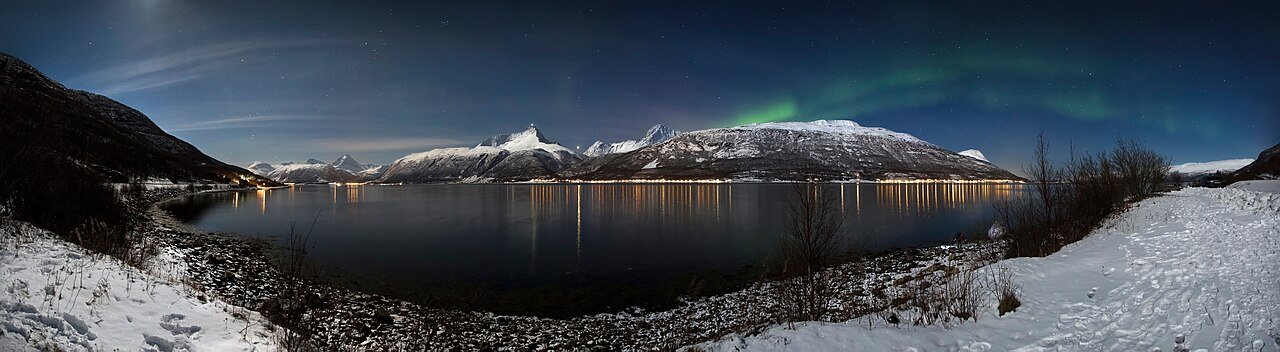
The Lyngen Alps rise to 1,800 metres directly from the waters of Lyngenfjord, 70 kilometres east of Tromsø. They're most famous in the ski touring world — Norwegian and European mountaineers come specifically for the combination of glaciated descents and fjord access — but the Lyngen peninsula is also excellent for northern lights, hiking, and anyone who wants dramatic Arctic mountain scenery with minimal tourist infrastructure.
Ski Touring in the Lyngen Alps
The Lyngen Alps' reputation in the ski touring world is justified. Routes range from beginner-friendly ridge walks to serious glacier descents with crevasse risk. The combination of skiable vertical from sea level, reliable snow from November to June, and the unique visual of skiing toward a fjord with open water views makes it unlike any ski area in the Alps or Scandinavia.
Most visitors hire local guides — essential for glacier routes and advisable for any route above 1,000m in winter. The main guiding companies operate from Lyngseidet and Furuflaten on the peninsula. Expect to pay €150–250 per person per day for guided ski touring. Lyngen Guide Service and Arctic Alpine Guides are the primary operators; both provide avalanche transceivers and rescue gear as part of the standard package.
Ski Touring Routes for Different Levels
Beginner routes like Tussdalstinden (1,067m) take 4–5 hours return and involve minimal glacier exposure — good for those new to ski touring who want the Lyngen experience without technical complexity. Intermediate skiers should consider Jiehkkavárri (1,433m), which has excellent descents and fjord views but requires navigation and slope assessment skills.
Advanced routes include Tromsdalstinden (1,649m) and the Strupffellstind glacier circuit, both involving glacier crossings and technical terrain. These absolutely require a guide. Snow conditions vary significantly by week — November and December may have variable snow quality as the season establishes, while February–April typically offer stable corn snow conditions. May offers spring skiing but crevasses become more exposed as temperatures rise.
Equipment and Logistics
If you're not bringing your own ski touring setup from home, rental is available in Tromsø but not on the peninsula itself. Plan to rent skis, bindings, boots, and avalanche safety kit (beacon, shovel, probe) in Tromsø the day before your tour. Costs run approximately 500–700 NOK per day for a complete setup. Bring your own insulated gloves, goggles, and thermal layers — the winds on ridges can be intense and the Arctic cold unforgiving.
Guides typically meet clients at agreed locations in Lyngseidet or directly at trailheads. Starting early (7:00–8:00am) gives you a full day before darkness arrives around 3:00–4:00pm in January. By April, you have 14+ hours of daylight, which changes the logistics entirely.
Northern Lights in the Lyngen Alps
The Lyngen peninsula is far enough from Tromsø to have significantly less light pollution, and the fjord views create natural reflection opportunities. The mountain silhouettes against an aurora-lit sky is a different composition from the coastal scenes near Tromsø. For aurora photography, the stretch of road between Lyngseidet and Furuflaten facing Ullsfjorden is excellent — dark, open north-facing horizon, with the mountains behind.
Peak aurora season (September–March) offers the most consistent viewing hours, with September and March offering better weather stability than the deepest winter months. The peninsula's position at 69°N gives you 4–5 hours of astronomical twilight in November–January, meaning you have realistic viewing windows without waiting until midnight. On clear nights with strong geomagnetic activity (Kp index 5+), you can see northern lights reflected in the fjord water — a distinctive Lyngen sight.
Self-Drive Aurora Hunting
Unlike Tromsø, there are few organized aurora tours based on the peninsula. Your best approach is a rental car from Tromsø (approximately 400–600 NOK per day) combined with real-time aurora forecasts via the Norwegian Meteorological Institute or Aurora Forecast app. Drive the E8 to Lyngseidet, then explore the quieter roads around Furuflaten and Olderdalen. These routes have minimal light pollution and multiple pullout points for photography.
Getting There and Logistics
From Tromsø, the Lyngen peninsula is reached via the E8 east and then a short ferry crossing (Breivikeidet–Svensby, 20 minutes, approximately 90 NOK per car) or the longer drive around via Olderdalen (adds 30 minutes but no ferry fee). Total journey time from Tromsø: 1.5–2 hours via ferry, 2–2.5 hours via Olderdalen. The ferry runs regularly but check Tromsø Fjord service timetables in winter — schedule can shift with ice conditions.
Accommodation on the peninsula is limited — most visitors day-trip from Tromsø or use small guesthouses. Lyngseidet has a handful of basic options; Furuflaten is smaller still. Book accommodation in advance if staying overnight (popular with ski touring groups in peak season). Fuel up in Tromsø before crossing to the peninsula; the only fuel station on Lyngen is in Lyngseidet and stock is limited in winter.
Summer vs Winter in Lyngen
Winter (November–May) is ski touring season. Summer (June–August) brings glacier hiking opportunities, midnight sun photography, and kayaking in the fjords below the mountains. The Lyngen Alps are at their most photogenic when snow-covered peaks meet the green-blue fjord water, which happens most dramatically in late spring (April–May) when snow persists at altitude while the fjord has thawed.
June brings the midnight sun but also persistent mosquitoes in lower valleys. July–August are warmest but with heaviest rainfall. September offers autumn light and fewer insects. For photography specifically, late April through May combines the longest daylight with dramatic snow-and-water contrasts.
What to Know Before You Go
Weather and Conditions
Arctic mountains create their own weather. Conditions on the Lyngen summits can differ radically from Tromsø (70km away). Wind speeds increase exponentially with elevation — ridges at 1,500m regularly see 40–60 km/h winds in winter. Visibility can drop to 50 metres in cloud within minutes. Always bring more insulation than you think you'll need and check the latest avalanche forecast from the Norwegian Avalanche Warning Service before planning ski routes.
Physical Fitness Requirements
Even "beginner" ski touring routes involve 600–800m of vertical ascent and 5–7 hours of continuous activity in cold conditions. You need baseline cardiovascular fitness and experience on skis. If you've never ski toured, consider a one-day lesson in Tromsø before heading to Lyngen. The consequences of poor decision-making or physical collapse in Arctic mountains are serious.
Cost Breakdown
| Item | Cost (approximate) | Notes |
|---|---|---|
| Car rental (Tromsø, 1 day) | 400–600 NOK | Budget options available; winter tyres mandatory |
| Ferry crossing (Breivikeidet–Svensby) | 90 NOK per vehicle | One way; check seasonal timetables |
| Guided ski tour (per person, full day) | €150–250 | 2–3 person groups typical; glacier routes at higher end |
| Ski/boot rental (Tromsø, full setup) | 500–700 NOK/day | Book in advance during peak season |
| Accommodation (guesthouse, Lyngseidet) | 600–900 NOK/night | Basic rooms; book ahead |
| Dinner (small restaurant, Lyngseidet) | 200–350 NOK | Limited dining; bring snacks |
Who Should Visit Lyngen
Lyngen is primarily for people who are active outdoors — skiers, hikers, or photographers with specific landscape goals. It's not a destination for people who want guided tours and infrastructure. If you want the drama of the Lyngen scenery without the activity commitment, it works as a day trip from Tromsø combined with a self-drive aurora chase in the evening.
Serious landscape photographers should allocate 2–3 days minimum. Skiers planning multiple routes benefit from 5–7 day trips. Casual visitors doing a half-day drive and northern lights hunt need only a day.
Frequently Asked Questions
Is it safe to ski tour in Lyngen without a guide?
No, unless you are an experienced ski mountaineer with avalanche training and rescue certification. Glacier crevasses, steep gullies, and avalanche terrain dominate routes above 1,000m. Local guides know current snow conditions, safe descent lines, and rescue protocols. The cost of a guide (€150–250) is cheaper than helicopter evacuation (€10,000+). Use a guide.
Can you see the northern lights from Lyngen year-round?
No. The aurora occurs year-round but is only visible during darkness. From late May to mid-July, the Arctic has midnight sun — no darkness, no aurora visibility. September through March offers reliable darkness and high aurora frequency. September and March have the best balance of viewing hours, cloud-free nights, and predictable weather.
Do I need to stay overnight on the peninsula?
Not necessarily. Tromsø is only 70km away (90 minutes by car). Most day-trip visitors drive from Tromsø in the morning for a ski tour or hike, return to Tromsø for dinner, then drive back to Lyngen for aurora hunting in the evening. This works well if you have 2–3 days total. For longer ski touring trips (4+ days), staying on the peninsula reduces commute time.
What's the best time of year to visit Lyngen?
For ski touring: February through April offers stable snow, improving daylight, and reliable weather windows. For northern lights plus skiing: October (early season snow, strong auroras, long viewing hours) or April (stable spring corn, reliable auroras, 12+ hours daylight). For pure aurora hunting: September and March (best cloud-free night frequency). For hiking and photography: May and June (snow/water contrasts, midnight sun light, mosquitoes starting). Avoid November (unpredictable early-season snow) and July–August (insects, least dramatic light).