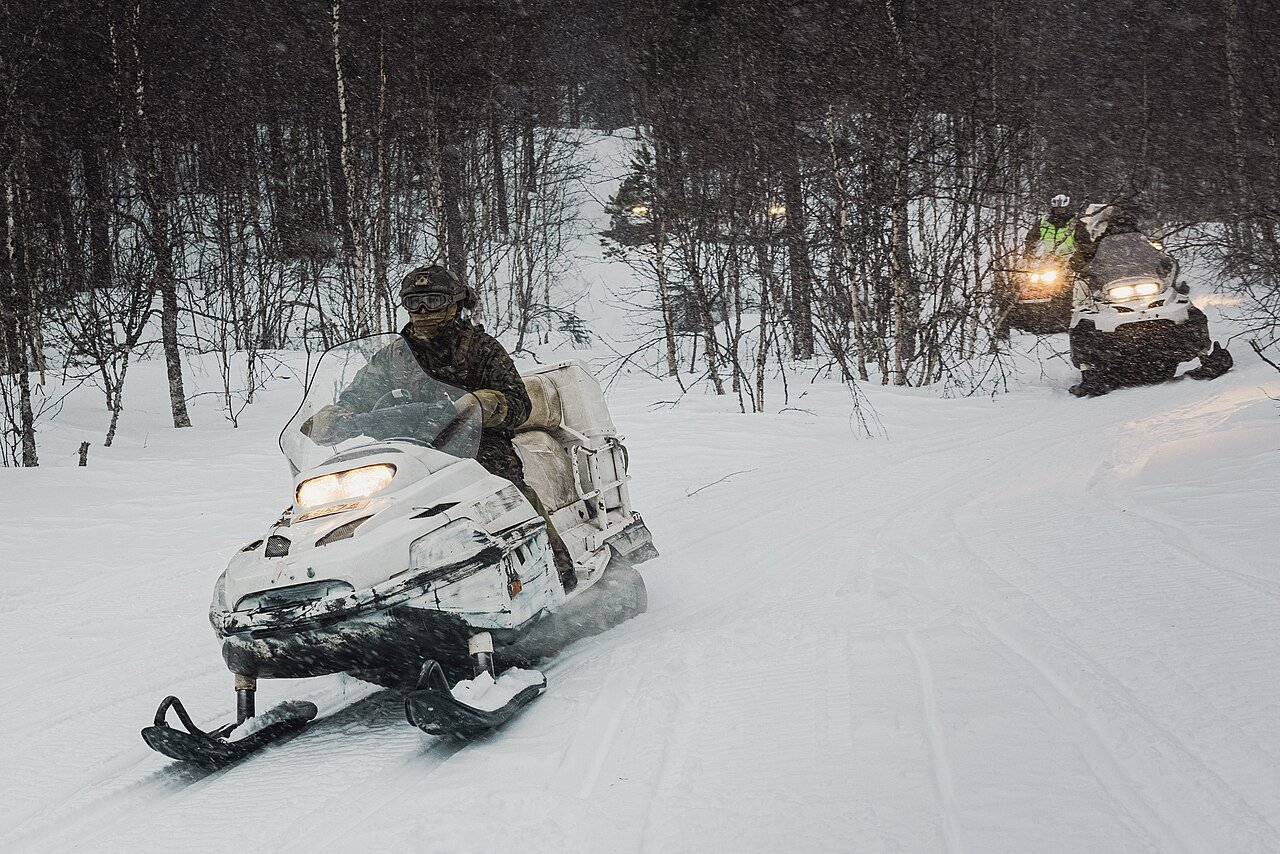
Beyond the 2-3 hour safari, Arctic Norway offers multi-day snowmobile expeditions that take you deep into the wilderness of the Finnmark plateau — one of the largest uninhabited areas in Europe. These are serious adventure tours requiring physical fitness and preparation, but they offer an experience of Arctic isolation impossible to find on day trips.
Multi-Day Snowmobile Options
Finnmark Plateau traverse: The classic multi-day route. The Finnmark vidda is a vast elevated tundra at 300-400m altitude, covering an area larger than Denmark. Expeditions typically run 3-7 days, covering 100-200km per day on marked wilderness trails. Nights in traditional mountain huts (gamme) or DNT cabins.
Kirkenes to North Cape: The Finnmark Challenge — a 500km+ route across the Arctic from the Russian border area to the tip of Norway. Available as guided expeditions for experienced riders. Takes 5-7 days.
Norway-Finland border tours: Cross into Finnish Lapland and explore the interconnected trail network between Karasjok, Kautokeino, and Finnish Sami areas. 3-4 day circuits available from operators in Alta.
Key Operators and Pricing
Several established operators run multi-day expeditions from bases in Tromsø, Alta, and Karasjok. Prices vary significantly based on group size, accommodation standard, and seasonality.
| Operator / Tour Type | Duration | Distance | Price (per person) | Base Location |
|---|---|---|---|---|
| Standard Finnmark Plateau 3-day | 3 days | 150-200 km | 8,500-10,500 NOK (€720-890) | Karasjok / Alta |
| Extended Plateau 5-day | 5 days | 300-400 km | 18,000-24,000 NOK (€1,530-2,040) | Karasjok / Tromsø |
| Kirkenes-North Cape Expedition | 5-6 days | 500+ km | 22,000-28,000 NOK (€1,870-2,380) | Kirkenes |
| Norway-Finland Border Circuit | 3-4 days | 200-250 km | 9,000-12,000 NOK (€765-1,020) | Alta / Kautokeino |
Prices listed are approximate and include snowmobile rental, guide, accommodation, and meals. Group discounts (4+ people) typically reduce per-person cost by 10-15%. Solo travellers can join group expeditions; private guide expeditions cost 20-30% more.
Requirements and Qualifications
You need a valid driving licence for multi-day tours in Norway. Physical fitness matters — driving a snowmobile for 6-8 hours per day in -25°C conditions is exhausting. Previous snowmobile experience is required by most expedition operators for multi-day tours (a day's experience on a 2-3 hour safari is usually sufficient).
Operators provide emergency equipment, satellite communication, and a guide who knows the terrain and weather patterns. Never attempt multi-day wilderness snowmobile travel without a professional guide on the Finnmark plateau — whiteout conditions can arrive without warning and navigation becomes impossible.
Fitness and Endurance Factors
Multi-day expeditions demand sustained physical effort. You're sitting upright on a vibrating machine in extreme cold while constantly adjusting your body position to steer and maintain balance. Typical daily riding is 6-8 hours with a lunch break, often with minimal wind protection. Expect muscle fatigue in your legs, shoulders, and lower back by day two. Riders under 25 or over 60 should consider shorter 3-day options first. Those with lower back problems should discuss this with operators beforehand.
What to Expect: Daily Routine
Days start early — on the trail by 8-9am before temperatures drop further in the afternoon. Lunch at a sheltered point, either packed food or heated at a wilderness hut. Evenings in heated cabin accommodation with sauna and traditional food (reindeer stew is standard). Northern lights viewing from the open plateau at night is spectacular — no light pollution for 200km in any direction.
Accommodation on Expeditions
Overnight stays depend on the expedition type. Budget options use traditional lavvu tents (with heating) or small mountain huts with basic facilities — shared sleeping areas, no hot water. Mid-range expeditions use staffed DNT (Norwegian Alpine) cabins with heated rooms, sauna, and proper meals. Premium expeditions offer private cabins with ensuite facilities and higher-quality food.
Regardless of accommodation level, you'll sleep well — the Arctic air and physical exertion ensure 9-10 hours of solid sleep nightly. Bring earplugs if you're noise-sensitive; other riders will snore.
Weather and Seasonal Conditions
Multi-day expeditions run from late December through March. December and January have shortest daylight (2-4 hours) but most stable snow conditions and clearest aurora nights. February-March offer more daylight (6-8 hours) but increasing wind and occasional warmer days that affect snow quality. Late March can see slushy snow at lower altitudes.
Temperature ranges: -15°C to -35°C on the plateau depending on week and time of day. Wind chill is the real factor — plateau winds can push apparent temperature to -40°C or lower. Spring expeditions (late March-April) are riskier; snow can be unstable and weather patterns less predictable.
What to Pack and Wear
Operators provide the snowmobile suit and helmet. You need to bring your own thermal layers, as fit and comfort matter for an all-day ride.
- Base layers: Merino wool or synthetic (avoid cotton) — thermal tops and bottoms
- Mid layers: Fleece or wool sweater for cabin use
- Socks: Thick merino or wool climbing socks (bring 5-6 pairs)
- Hand wear: Liner gloves for inside mittens; expedition operators provide heated snowmobile gloves
- Face protection: Balaclava or ski mask; windburn happens fast
- Boots: Insulated winter boots rated to -40°C (Sorel, Kamik brands are reliable)
- Eye protection: Sunglasses for plateau glare; bring spares
Total clothing weight should be kept under 8kg — your guide will advise on packing. Most operators recommend shipping excess luggage to accommodation rather than carrying it on the sled.
Cost Breakdown
Multi-day expeditions cost 5,000-12,000 NOK (€430-1,050) per person per day depending on group size, accommodation level, and operator. A 5-day expedition typically costs €3,000-5,000 per person all-inclusive. Not cheap, but this is an experience without equivalent elsewhere in Europe.
What's usually included: snowmobile rental, fuel, guide, all meals, accommodation, emergency equipment, and satellite communication. What's not included: flights to Norway, transfers to/from tour base, travel insurance (essential), personal gear, gratuities.
Pre-Expedition Checklist
- Book 4-6 weeks ahead during January-February (peak season)
- Confirm valid driving licence and passport requirements
- Arrange travel insurance that covers winter sports and Arctic conditions
- Schedule a pre-tour call with your operator to discuss fitness and experience
- Buy or rent winter boots and thermal clothing locally (cheaper than shipping)
- Download offline maps of the region; mobile coverage is non-existent on the plateau
- Confirm accommodation details and meal provisions (vegetarian/dietary requirements)
Frequently Asked Questions
Can I join a multi-day tour if I've never ridden a snowmobile?
Most operators require at least one day of prior experience. Consider doing a 2-3 hour safari 1-2 days before your expedition to build confidence and muscle memory. If you have any hesitation about your riding ability, mention this to your operator — they can adjust pace and route accordingly or recommend the easier 3-day options instead of 5+ day expeditions.
What happens if weather turns severe during the expedition?
Guides monitor conditions hourly and will modify routes or rest at cabins if whiteout, extreme wind, or dangerous chill develops. Multi-day tours have built-in flexibility — an extra rest day at a cabin is preferable to riding in dangerous conditions. In rare cases where conditions deteriorate severely, guided evacuation to nearest shelter is arranged. This is why satellite communication and experienced guides are non-negotiable.
Is the northern lights guaranteed on a winter expedition?
No. Aurora visibility depends on solar activity (which peaks on 11-year cycles) and clear skies. December-February offer better odds due to longer nights, but 4-5 nights on the plateau doesn't guarantee sightings. Most operators include northern lights viewing time without charging extra. Statistically, you have a 40-60% chance of seeing aurora on a 5-day expedition. Bring a good camera if aurora photography interests you; the plateau's darkness produces exceptional images.
How do I get to the expedition starting point?
Most multi-day tours depart from Karasjok, Alta, or Kirkenes. Rent a car or arrange transfers from the nearest airport (Tromsø is the largest hub, 5-6 hours from Alta; Kirkenes is 2 hours from Kirkenes town). Operators typically offer airport transfer packages (€80-150 return). Book transfers when confirming your tour, not separately.