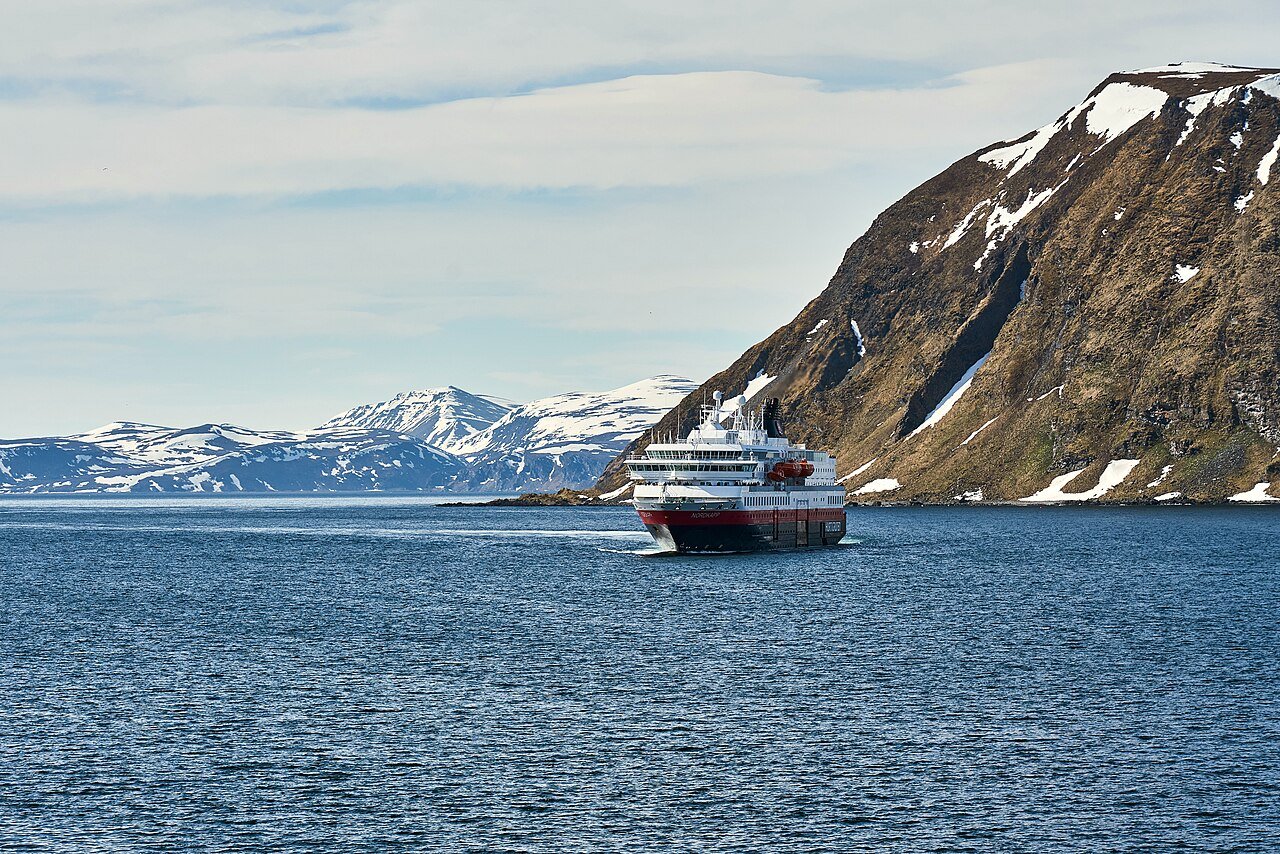
Honningsvåg is the town most visitors use as a base for visiting North Cape (Nordkapp), Europe's northernmost point accessible by road. It's a small fishing town of around 2,500 people on the island of Magerøya, connected to the Norwegian mainland by the E69 highway and the 7km Nordkapp Tunnel.
Getting to Honningsvåg
By air: Honningsvåg Airport (HVG) has daily flights from Oslo via Tromsø or Alta. The airport is small but reliable. Flights from Oslo take about 2.5 hours with a connection. SAS and Widerøe operate these routes. Expect to pay 1,200–1,800 NOK for a one-way ticket from Oslo depending on the season.
By car: Drive the E6 north from Alta (about 2 hours, 180km), then turn onto the E69 which takes you through the Nordkapp Tunnel to Magerøya island and Honningsvåg (another 1.5 hours, 100km from the junction). The tunnel costs 220 NOK for a car (one-way); it cuts through rock 212 metres below sea level. This is your only road access to the North Cape area. Fuel up in Alta — petrol is significantly more expensive at Honningsvåg.
By Hurtigruten: The coastal ferry stops at Honningsvåg year-round on its way between Bergen and Kirkenes. A one-way journey from Tromsø to Honningsvåg takes about 20 hours and costs from 1,600 NOK upwards depending on cabin type. This is a scenic but slower option than flying.
Where to Stay
Honningsvåg has limited but adequate accommodation. Here's what you'll find:
Rica Hotel Honningsvåg is the main option — a 3-star hotel with 79 rooms, centrally located near the harbour. Double rooms cost around 1,200–1,600 NOK per night in high season (summer). The hotel has a restaurant, and the location means you're steps from the town's main amenities. Book ahead in May-July and November-January when aurora and midnight sun hunters fill beds quickly.
Nordkapp Camping offers both powered and standard camping pitches plus a handful of basic cabins (4-6 berth, sleeping bag rental available). A cabin for two costs around 700–900 NOK per night. The site is on the town's edge with views toward the sea. Facilities include showers, a small shop, and a kitchen cabin. This is the budget option and genuinely used by working fishermen, not just tourists.
Guesthouses and private rentals operate sporadically. Check Airbnb and Booking.com, but options are limited — Honningsvåg isn't built for mass tourism. A private cottage might cost 1,000–1,400 NOK per night.
For North Cape itself, the Nordkapp Visitor Centre has a restaurant and gift shop but no overnight accommodation. Most visitors make the 34km round-trip from Honningsvåg (about 45 minutes drive each way). Some specialist tour operators offer guided overnight experiences at North Cape in winter specifically for aurora viewing from the clifftop — these are pricey (2,000–3,500 NOK per person) but genuinely memorable if you get clear skies.
North Cape vs Knivskjellodden
North Cape (Nordkapp) at 71°10'21"N is the most visited "northernmost point" and accessible by car year-round (the E69 road remains open in winter, though conditions can be severe with ice and occasional temporary closures during extreme weather). The visitor centre sits perched on a dramatic cliff face — the photo opportunity is the point of most visits.
However, technically the northernmost point of mainland Norway is Knivskjellodden (71°11'6"N), about 2km further north as the crow flies. Reaching it requires a 9km round-trip hike from the North Cape car park — it's marked and straightforward, but only accessible May through September in good conditions. The hike takes 2–3 hours and offers no facilities. Most visitors skip this unless they're specifically hunting for the absolute northernmost bragging rights or hiking the region seriously.
What to Do Around Honningsvåg
- Visit North Cape (Nordkapp) — mandatory. The visitor centre charges 390 NOK entry (children free under 6). The experience is concentrated: you pay, walk to the clifftop, take photos, visit the souvenir shop and restaurant, then leave. Most people spend 1–2 hours here. In midnight sun season (May-July) you can be up there at 11 PM watching the sun skim the horizon; in winter the cliffside is windswept, dark and frequently cratered with aurora.
- Gjesværstappan bird cliffs — a puffin and seabird colony about 20km from Honningsvåg (accessible May-August). Several operators run boat tours from Honningsvåg harbour; Skarøy Havfiske is one established operator. Tours cost around 500–700 NOK and take 3–4 hours. Puffins are most active June-July.
- Sea fishing tours — Honningsvåg's economy is built on cod and halibut. Several charter operators offer 4–6 hour fishing trips into the Barents Sea. You don't need experience; fish are plentiful. Expect to pay 800–1,200 NOK per person. Fish can be cleaned and frozen for you to take home.
- Nordkapp Museum in Honningsvåg town itself covers local fishing history and the North Cape's role in Arctic exploration. Entry is 100 NOK. It's small but worth 30 minutes if weather confines you to town.
- Snowmobile tours (winter only, December-March) — several operators based in Honningsvåg run guided snowmobile excursions across Magerøya's plateau. A half-day tour costs 1,500–1,900 NOK per person and often combines aurora hunting if you go at night.
- Dog sledding — less common than snowmobiling at Honningsvåg (it's not dog-sled country in the same way as inland Finnmark), but winter operators can arrange it through partners. Expect 2,000+ NOK for a half-day experience.
Best Time to Visit
Midnight sun season (mid-May to late July): The sun doesn't set. North Cape is the main draw—visitors often stay until midnight or later to photograph the sun circling the horizon. Roads are clear, accommodation books months ahead, and prices peak. The weather is unpredictable but generally mild (8–12°C). This is peak tourist season.
Northern lights season (November to March): Clear, cold nights offer the best aurora chances. December-January brings continuous darkness—perfect for lights but also very cold (-5 to -15°C). The E69 road occasionally closes for 6–12 hours during heavy snow or gales, so flexibility is necessary. Fewer tourists means easier accommodation booking and lower prices.
Summer hiking season (June to August): The midnight sun makes this best for Knivskjellodden hikes and Gjesværstappan bird-watching. Weather is coolest in early June, most stable in July. Midge season starts late June.
Shoulder seasons (April-May, September-October): Fewer visitors, unpredictable weather, and limited daylight make these less popular. The road is open but conditions can change rapidly.
What to Know Before You Go
- The North Cape road can close suddenly: In winter especially, gales and snow trigger temporary closures. The Nordkapp Tunnel is heated and traction-controlled, but the open plateau beyond it is exposed. Check road conditions at vegvesen.no before heading out.
- Honningsvåg is genuinely remote: It's the last service point before the North Cape. Petrol, groceries, and restaurant options are limited and pricier than mainland Norway. Bring cash as backup—card payment is common but not guaranteed at every small establishment.
- Plan your North Cape visit carefully: Weather can degrade visibility in minutes. If you're aurora hunting in winter, you may need to stay several nights to catch a clear evening. If you're there for midnight sun, timing matters: 11 PM-2 AM offers the best light angles for photography.
- The E69 toll tunnel is one-way pricing: You pay when entering toward North Cape; no toll on the return journey. Have a card or small notes ready.
- Aurora forecasting is unreliable: Never assume a high KP index (solar activity forecast) will produce visible auroras. Cloud cover kills the show. Winter nights at North Cape are long but not guaranteed aurora nights.
- Expect wind: Magerøya is exposed to Atlantic weather systems. Even in summer, it can be windy and rain-prone. Layer clothing and bring a waterproof shell.
Practicalities: Money, Fuel, and Services
| Service | Details | Cost/Note |
|---|---|---|
| Petrol (Honningsvåg) | One Shell station in town centre | 16–18 NOK/litre (often 1–2 NOK above mainland price) |
| Groceries | Coop supermarket; limited choice | 20–30% pricier than Alta or Tromsø |
| ATM | Available at hotels and Coop | 4–5 NOK fee typical |
| Doctor/pharmacy | Small clinic in town (not 24hr) | Emergency referrals to Tromsø (120km) |
| Restaurant options | Rica Hotel restaurant; fish-focused local eateries | 180–280 NOK for main courses |
| Mobile coverage | Telenor and Telia both cover town; weak at North Cape plateau | Standard roaming applies |
Related Guides
Frequently Asked Questions
How long should I spend in Honningsvåg?
Most visitors spend 2–3 days: one day for the North Cape visitor centre (half-day), one for a secondary activity like birdwatching or fishing, and one flexible day in case of weather delays (especially in winter). If you're chasing aurora, budget 3–4 nights to increase your odds of a clear sky. Midnight sun visitors often arrive for a 3–5 day block around the summer solstice (21 June) to maximize the continuous daylight experience.
Is the Nordkapp Tunnel scary to drive through?
No. It's 7km long, well-lit, heated, and has clear markings. Speed limit is 80 km/h. You'll notice the road is carved through rock, but it's not a white-knuckle experience—hundreds of cars use it daily. If you're uncomfortable in tunnels, the longest section is monotonous rather than claustrophobic.
Can I visit North Cape and return to Tromsø in one day?
Technically yes, but inadvisable. Tromsø to Honningsvåg is about 5 hours by car (via E6/E69). Adding 1.5 hours for the North Cape visit and 5 hours return leaves no buffer for weather, road closures, or rest. We'd recommend staying overnight. If you must do it as a long day trip, rent a car, drive early morning from Tromsø, spend 1 hour at North Cape, and return. Budget 12–14 hours total. This only works in good weather and summer daylight.
What's the difference between Aurora Borealis at North Cape versus Tromsø?
Location. North Cape (71°N) is further north, meaning darker autumn/spring nights arrive earlier and last longer—potentially better odds for aurora viewing December-January. However, North Cape is windier and cloudier due to Atlantic exposure. Tromsø (69°N) has slightly shorter winter darkness but more stable, clearer weather patterns. For aurora hunting, we usually recommend Tromsø as the primary base due to weather reliability, but dedicated viewers do combine both locations over a 7–10 day trip.